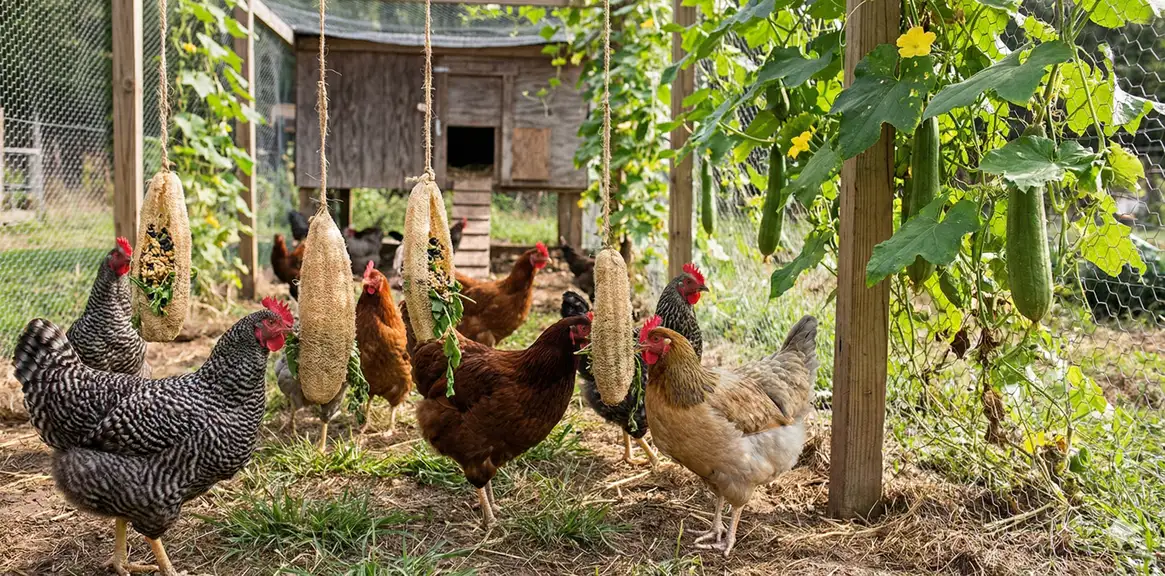
Keeping chickens happy and healthy goes beyond providing food and water. Chickens are intelligent, curious creatures that need mental stimulation and physical enrichment to thrive. One of the most effective, natural, and sustainable enrichment options for your flock is loofah. These fibrous gourds offer entertainment, encourage natural behaviors, and can even reduce common behavioral problems in backyard chicken coops. Using safe materials for animals like natural loofah ensures your flock stays healthy.
Whether you're looking to prevent feather picking, reduce boredom during winter months, or simply provide your flock with engaging activities, loofah presents a perfect solution. Best of all, you can grow your own loofah near the chicken coop, creating a self-sustaining cycle of enrichment that costs nothing and benefits both your garden and your birds. This approach is part of integrated animal systems in sustainable homesteading.
Benefits of Loofah for Chickens
Using loofah in your chicken run offers numerous advantages that go beyond simple entertainment. Understanding these benefits helps you maximize the positive impact on your flock's health and behavior.
Chickens have a strong instinct to peck, which serves multiple purposes in the wild including foraging for food, exploring their environment, and establishing social hierarchy. When confined to a run without adequate outlets for this behavior, chickens may redirect their pecking toward each other, resulting in feather picking, injury, or even cannibalism in severe cases.
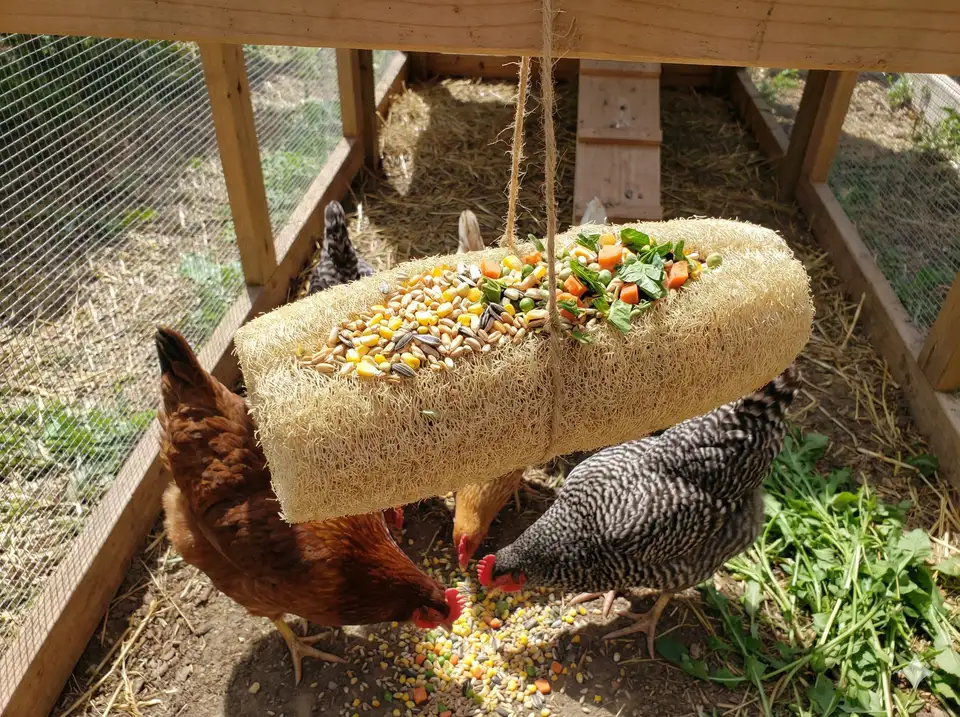
Loofah provides an ideal pecking target. Its fibrous, textured surface is satisfying to work at, and chickens can spend hours pecking, pulling, and scratching at hanging loofahs. This redirects their natural behavior toward a harmless object rather than their flockmates.
Bored chickens are unhappy chickens, and boredom often leads to destructive or aggressive behaviors. Loofah enrichment keeps your flock mentally engaged by providing a novel object to investigate and interact with. Chickens will approach hanging loofahs with curiosity, testing them with their beaks and learning how they move and respond to pecking.
Rotating different sizes and hanging configurations of loofahs keeps the enrichment fresh and interesting. Some chickens become particularly fond of their loofah toys, returning to them throughout the day for entertainment.
- Reduces feather picking and aggressive pecking behavior
- Provides hours of entertainment and mental stimulation
- Encourages physical activity and exercise
- Satisfies natural foraging and scratching instincts
- Completely safe, non-toxic, and biodegradable
- Cost-effective or free if you grow your own
- Suitable for all chicken breeds and ages
Recommended Chicken Enrichment Supplies

PIUH Complete Goat Milk Soap Making Kit
All-in-one soap making kit with goat milk base, molds, dried flowers, and essential tools. Ideal starter kit for beginners wanting to create loofah soap bars.
Check Price on Amazon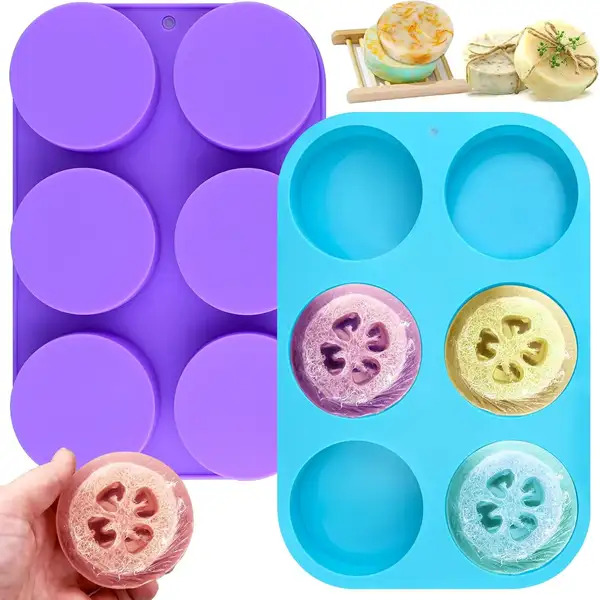
Sakolla Round Silicone Soap Molds for Loofah Slices (2-Pack)
Round silicone molds specifically designed for loofah soap making. Perfect for creating circular loofah soap bars that fit loofah slices perfectly.
Check Price on AmazonAs an Amazon Associate, we earn from qualifying purchases.
How to Use Loofah for Chicken Enrichment
Successfully incorporating loofah into your chicken run requires proper preparation and strategic placement. Follow these guidelines to maximize your flock's enjoyment and safety.
Selecting the Right Loofah
Only use natural, untreated loofah sponges for your chickens. Avoid any loofahs that have been bleached, dyed, or treated with perfumes or chemicals. The best options are:
- Home-grown loofahs: Harvested from your own garden and dried naturally
- Natural loofah sponges: Purchased specifically as natural, unprocessed loofahs
- Whole dried gourds: Complete loofah gourds before processing into sponges
Whole loofahs work better than pre-sliced ones, as they last longer and provide more pecking surface area. However, you can also offer sliced sections or pieces from larger loofahs.
Hanging Methods and Placement
Proper hanging ensures chickens can interact with loofahs safely while maximizing entertainment value:
- Single Hanging Method: Thread natural twine, jute rope, or small chain through the center of the loofah lengthwise. Secure it to the coop ceiling or run framework at a height where chickens must stretch slightly to reach it (typically 12-18 inches from the ground for standard breeds).
- Cluster Hanging: Create a mobile-style arrangement with multiple loofahs hanging at different heights from a single support. This creates more visual interest and accommodates multiple chickens pecking simultaneously.
- Horizontal Threading: String multiple loofahs along a horizontal rope or wire stretched across the run, spacing them 8-12 inches apart. Chickens can work their way along the line, and the connected loofahs create interesting movement.
- Hang loofahs where they'll catch natural light, making them more visible and attractive
- Position away from food and water to create separate activity zones
- Ensure hanging materials are secure but can be easily removed for replacement
- Vary heights to accommodate different sized chickens in mixed flocks
- Place near roost areas to provide evening entertainment before bed
- Avoid hanging over droppings boards or nesting boxes
Introducing Loofah to Your Flock
Some chickens immediately investigate new objects, while others are more cautious. If your flock seems hesitant about the loofah:
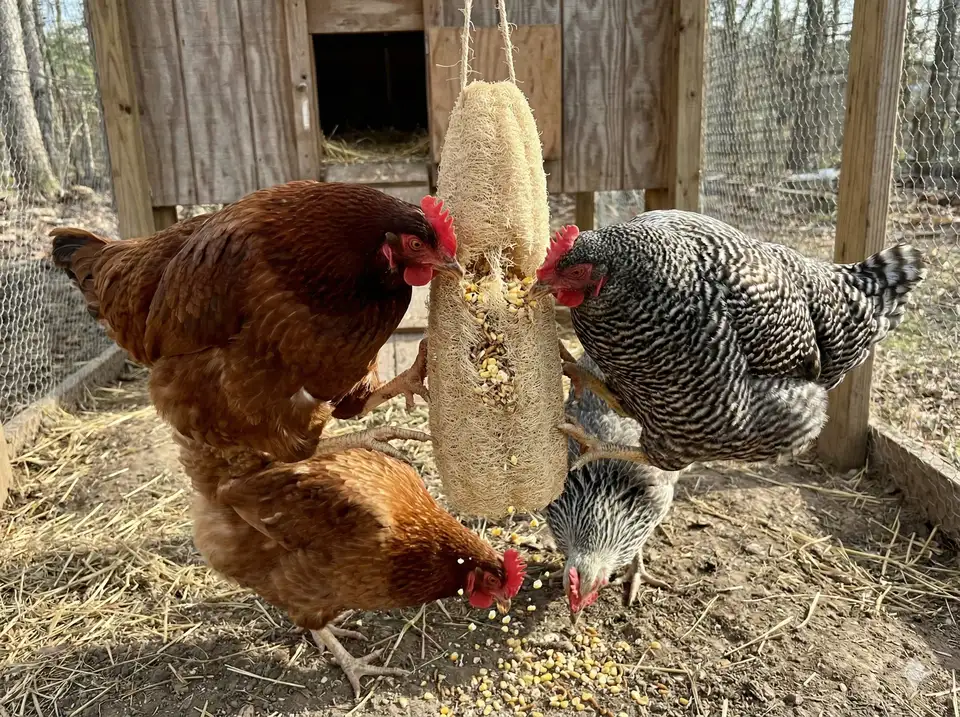
- Rub some favorite treats (mealworms, cracked corn) onto the loofah surface
- Demonstrate by gently pecking at it yourself to show it's safe
- Start with loofahs placed on the ground before hanging them
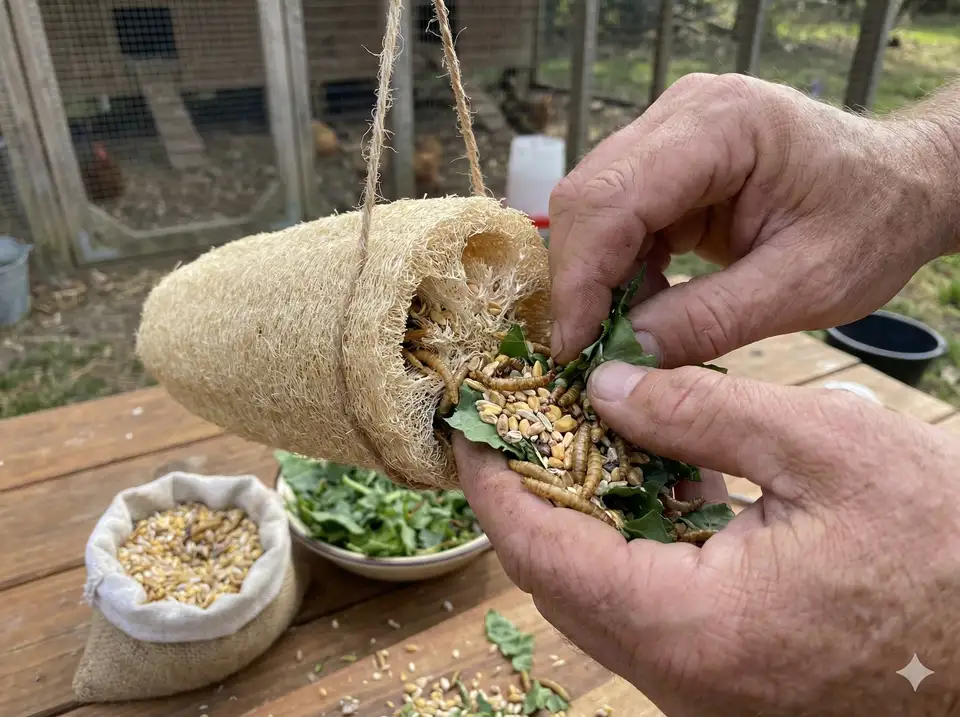
- Stuff loofahs with treats like lettuce leaves or herb sprigs
Once a few chickens start interacting with the loofah, others typically follow due to their flock mentality and curiosity.
Safety Considerations for Loofah in Chicken Coops
While loofah is generally very safe for chickens, following proper safety guidelines ensures your flock remains healthy and protected.
Material Safety
Natural loofah is non-toxic and safe if ingested in small amounts. Chickens may occasionally pull off and swallow tiny fibers, which pass through their digestive system without issue. However, you should:
- Never use synthetic sponges or plastic loofahs
- Avoid loofahs with added soaps, oils, or fragrances
- Remove any commercial packaging materials or tags
- Check that hanging materials (twine, rope) are also natural and safe
Maintenance and Replacement
Loofahs in chicken runs need regular monitoring and eventual replacement:
- Weekly inspection: Check for excessive soiling, mold, or deterioration
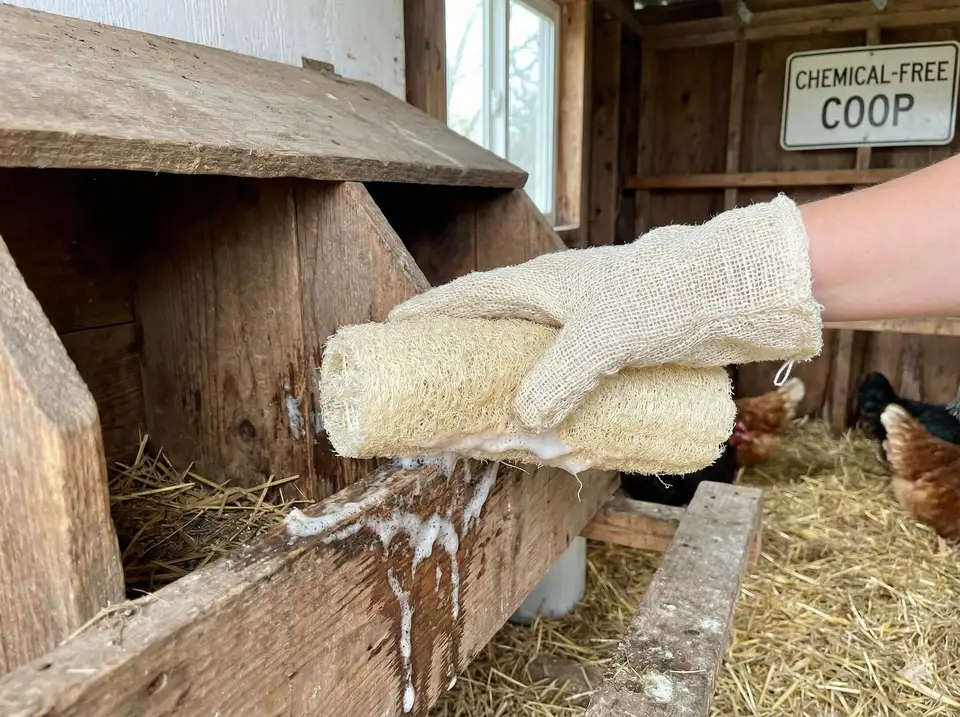
- Cleaning: Loofahs can be rinsed with water if dusty, but heavily soiled ones should be replaced
- Replacement timeline: Replace loofahs every 2-4 weeks depending on flock size and pecking intensity
- Composting: Used loofahs make excellent compost material
Preventing Entanglement
While rare, ensure hanging methods don't create loops or spaces where curious chickens could get stuck:
- Secure all rope ends so they don't dangle loosely
- Avoid creating large loops that could catch legs or necks
- Monitor the first few days after installation to observe chicken interactions
- Adjust height or position if chickens seem to struggle with the setup
Growing Loofah Near Your Chicken Coop
Growing your own loofah plants provides a sustainable, cost-free source of chicken enrichment while creating additional benefits for your homestead. Learn more about growing in chicken areas for a complete guide. Loofah vines (Luffa aegyptiaca or Luffa acutangula) are vigorous growers that thrive in the same conditions chickens enjoy.
Strategic Planting Locations
Position loofah plants where they provide maximum benefit to both your garden and your flock:
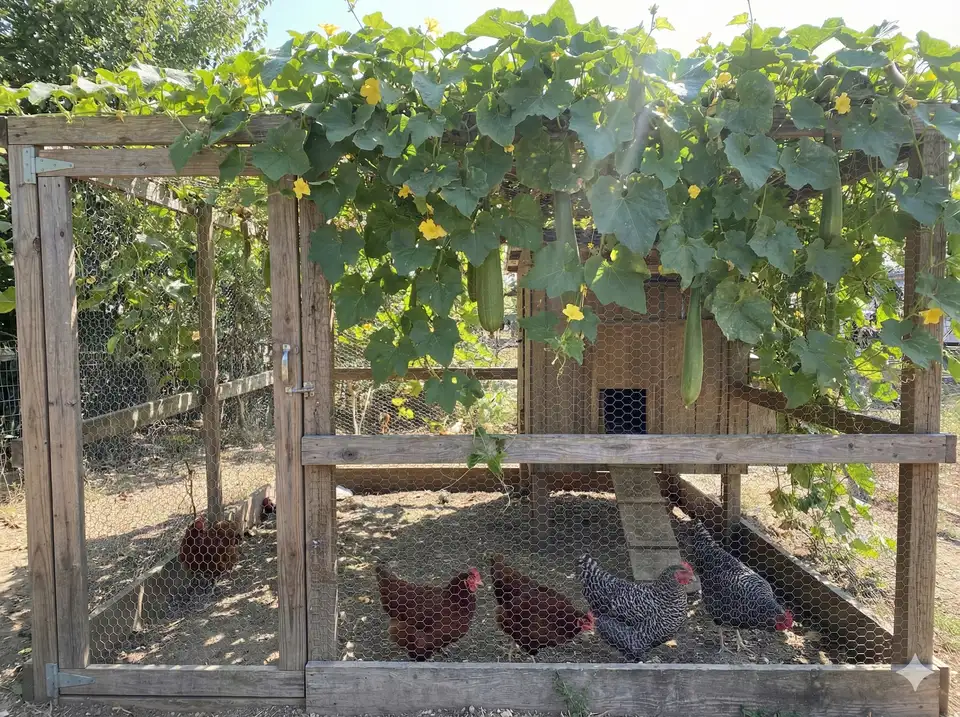
- Along Run Fencing: Plant loofahs outside your chicken run fence and train vines to grow up and over the fencing. This creates shade for animals during hot weather while keeping plants safe from being eaten before they mature. Mature loofahs can hang down into the run where chickens can peck at them.
- On Coop Trellises: Install sturdy trellises on the sunny side of your coop and grow loofahs vertically. The vines shade the coop walls, reducing interior heat, while producing loofahs that can be easily harvested for enrichment.
- Garden Integration: Grow loofahs in your main garden and harvest them for both household use and chicken entertainment. This maximizes your growing space efficiency.
Growing Requirements
Loofah plants need specific conditions to produce quality gourds:
- Climate: Requires 150-200 frost-free days for gourds to mature
- Sunlight: Full sun (6-8 hours daily minimum)
- Soil: Rich, well-draining soil with plenty of compost
- Water: Consistent moisture, especially during fruiting
- Support: Strong trellis or fence, as vines can reach 15-20 feet
Chicken manure makes excellent fertilizer for loofah plants. This is a perfect example of organic pest control with chickens and closed-loop farming. Create a sustainable cycle by composting used chicken loofahs with manure, then applying the finished compost to your loofah growing areas.
Harvesting for Chicken Use
For chicken enrichment, you have flexibility in harvest timing:
- Young loofahs (green): Can be harvested and dried specifically for chickens, though they're also edible for humans
- Mature loofahs (brown): Left on the vine until completely mature and dried for the best fibrous texture
- Processing: Remove outer skin, shake out seeds (save for next year's planting), and hang whole or cut into sections
A typical loofah vine produces 6-12 gourds per season, providing plenty of enrichment material for even large flocks.
Natural Chicken Toys with Loofah Variations
Beyond simple hanging loofahs, you can create enhanced enrichment activities that combine loofah with other natural materials chickens enjoy.
Treat-Stuffed Loofahs
Create foraging challenges by stuffing loofahs with chicken-safe treats:
- Fresh herbs (basil, oregano, parsley) tucked into the loofah fibers
- Leafy greens (lettuce, kale, spinach) threaded through the center
- Mealworms or other dried insects pressed into crevices
- Cracked corn or scratch grains sprinkled throughout
Chickens must work to extract the treats, providing extended entertainment and rewarding their natural foraging behaviors.
Loofah Swings and Perches
Attach large loofahs to low perches or branches where chickens can peck at them while roosting. Some chickens enjoy the texture against their feet and will stand on loofahs placed horizontally along low roosting bars.
Ground-Level Loofah Activities
Not all enrichment needs to be hanging. Try these ground-level variations:
- Place loofahs in shallow boxes filled with sand or dirt for dust bathing areas
- Scatter small loofah pieces around the run for discovery activities
- Create a loofah pile in a corner where chickens can scratch and explore
Composting Used Loofah with Chicken Waste
One of the most sustainable aspects of using loofah for chicken enrichment is the ability to compost used loofahs directly with chicken manure, creating nutrient-rich compost for your garden. For more details, see our guide on chickens and composting.
Why Loofah and Chicken Waste Compost Well Together
This combination creates ideal composting conditions:
- Carbon-Nitrogen Balance: Loofah is high in carbon (brown material), while chicken manure is high in nitrogen (green material). Together they achieve the optimal C:N ratio of about 30:1 for efficient composting.
- Aeration: Loofah's fibrous structure creates air pockets in compost, preventing compaction and promoting aerobic decomposition.
- Moisture Retention: Loofah fibers absorb and hold moisture, keeping the compost pile at ideal moisture levels.
- Biodegradability: Natural loofah breaks down completely in 60-90 days under active composting conditions.
Composting Process
To compost used chicken loofahs effectively:
- Collection: Remove heavily soiled loofahs from the chicken run and collect in a bucket
- Breaking Down: Tear or cut large loofahs into 3-4 inch pieces to speed decomposition
- Layering: Add loofah pieces to your compost bin alternating with layers of chicken manure and bedding
- Moisture: Water if needed to achieve dampness like a wrung-out sponge
- Turning: Turn the pile every 1-2 weeks to incorporate oxygen and monitor progress
- Curing: Allow finished compost to cure for 2-4 weeks before garden application
Compost Benefits
The resulting compost is excellent for vegetable gardens, flower beds, and particularly for growing next year's loofah plants:
- Rich in nitrogen from chicken manure for leafy growth
- Improved soil structure from decomposed loofah fibers
- Beneficial microorganisms from the composting process
- Balanced pH suitable for most garden plants
This creates a closed-loop system: grow loofah, use for chicken enrichment, compost with chicken waste, use compost to grow more loofah. It's sustainable homesteading at its finest.
Frequently Asked Questions
Yes, natural loofah is completely safe for chickens. The fibrous texture is perfect for pecking and scratching, and even if chickens ingest small fibers, they pass through harmlessly. Only use natural, untreated loofahs without any dyes, perfumes, or chemicals. Avoid synthetic sponges entirely.
Hang loofahs at beak height (about 12-18 inches from the ground) using natural twine, rope, or chain. Thread the twine through the loofah and secure it to the coop ceiling or run. You can hang them individually or create a cluster of 3-4 loofahs at different heights for maximum entertainment. Ensure all hanging materials are secure and won't create entanglement hazards.
Absolutely! Growing loofah on trellises along your chicken run provides natural shade for your flock while producing fresh entertainment toys. Keep plants outside the run where chickens can't access young plants, but within reach for occasional pecking at mature vines. This creates a sustainable supply of enrichment toys. A single loofah vine can produce 6-12 gourds per season.
Replace loofahs when they become heavily soiled, completely shredded, or lose their structure (typically every 2-4 weeks depending on flock size). Used loofahs can be composted with chicken manure, creating excellent garden compost rich in nitrogen and carbon. Inspect weekly for excessive wear or contamination.
Loofah provides natural pecking outlets, reducing aggression and feather picking in flocks. The fibrous texture satisfies chickens' instinct to forage and scratch. Hanging loofahs encourage jumping and stretching, promoting physical activity. They're also biodegradable, sustainable, and can be grown at home for free enrichment. Many backyard chicken keepers report significant reductions in behavioral problems after introducing loofah enrichment.