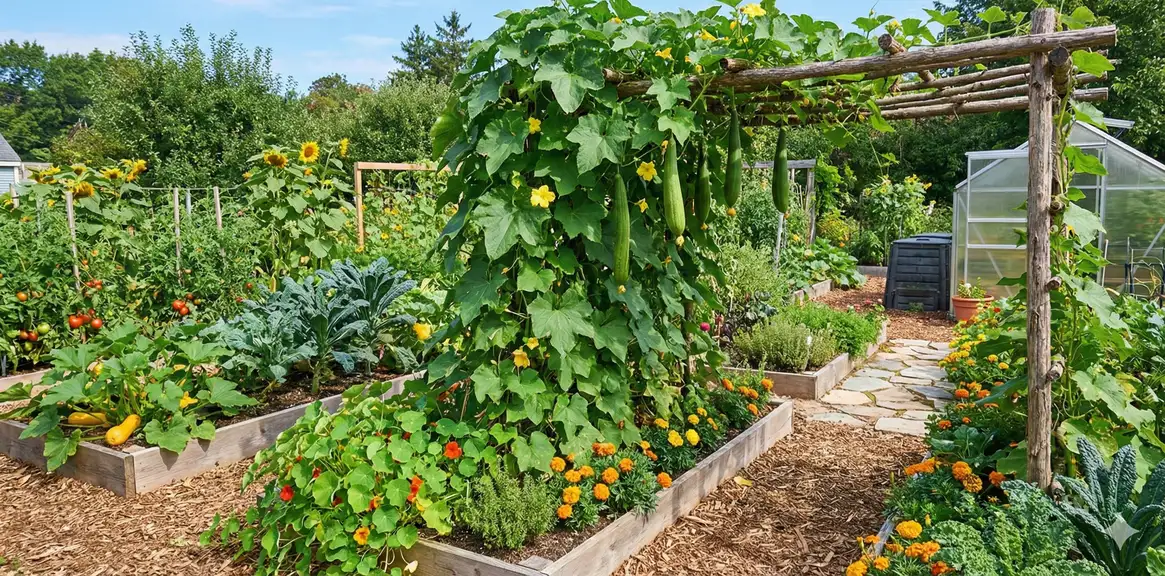
Permaculture design emphasizes creating productive ecosystems that mimic natural patterns while providing multiple benefits. Loofah (Luffa aegyptiaca and Luffa acutangula) embodies several core permaculture principles that make it an invaluable addition to any sustainable growing system.
The plant demonstrates remarkable versatility by occupying the vertical growing zone—a layer often underutilized in traditional gardens. This vigorous climbing vine can reach 15-30 feet, transforming simple structures like trellises, fences, or trees into productive vertical gardens without competing for precious ground space. Learn more about growing loofah in systems for comprehensive cultivation techniques.
Essential Permaculture Supplies

PIUH Complete Goat Milk Soap Making Kit
All-in-one soap making kit with goat milk base, molds, dried flowers, and essential tools. Ideal starter kit for beginners wanting to create loofah soap bars.
Check Price on Amazon
Rolio Mica Powder Colorants for Soap Making
Vibrant, skin-safe mica powder set for coloring handmade soaps. Create beautiful swirls and layers in your loofah soap bars with these cosmetic-grade pigments.
Check Price on AmazonAs an Amazon Associate, we earn from qualifying purchases.
Why Loofah Excels in Permaculture Design
- Stacking functions: One plant provides food, sponges, shade, compost, and biomass
- Maximizing edges: Vertical growth creates additional productive zones
- Using biological resources: Natural pest resistance reduces intervention needs
- Producing no waste: Every part is usable, from young fruit to mature fiber
- Obtaining a yield: Multiple harvests throughout a single growing season
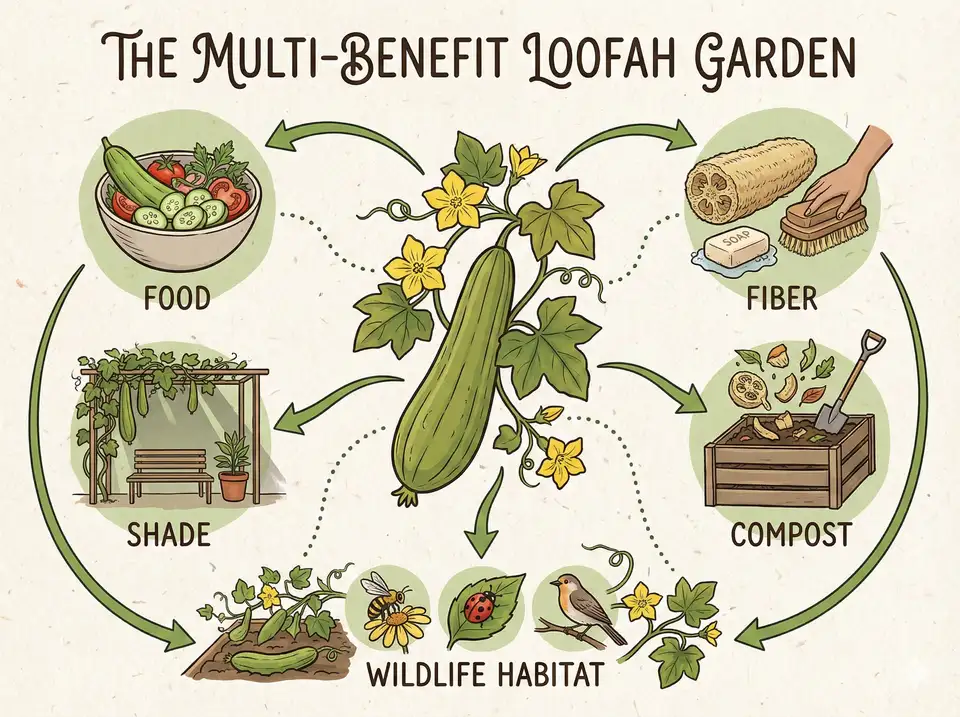
Unlike many annuals that deplete soil nutrients, loofah produces substantial biomass that enriches your soil when composted. A single mature plant can generate 20-30 pounds of organic matter—stems, leaves, and non-viable fruits—all perfect for building humus-rich compost. This demonstrates the importance of nutrient cycling in sustainable systems.
Integrating Loofah in Food Forest Systems
Food forests layer plants of different heights and functions to create self-sustaining ecosystems. Loofah fits seamlessly into this design as a productive climber in the vertical layer, whether growing on dedicated structures or using existing trees as living trellises.
Using Trees as Living Support
In mature food forests, sturdy fruit or nut trees provide excellent support for loofah vines. Choose trees with strong branch structures and adequate sunlight penetration. Ideal candidates include:
- Pecan or walnut trees: Tall with sturdy branches, though monitor for allelopathic effects
- Mulberry trees: Fast-growing with flexible branches that handle vine weight
- Persimmon trees: Moderate height with good sun exposure
- Elderberry shrubs: Perfect for smaller systems and easier harvest access
Plant loofah 3-4 feet from the tree trunk to avoid root competition while allowing the vine to climb naturally. This arrangement creates productive use of vertical space while the tree provides dappled shade that can actually benefit loofah during extreme heat periods.
Trellis Systems for Food Forests
In younger food forests or where trees aren't suitable for vining plants, dedicated trellis systems integrate beautifully into permaculture designs. Consider functional vine structures that serve multiple purposes:
- Archway tunnels: Create pathways through your food forest while maximizing overhead growing space
- A-frame structures: Provide shade for heat-sensitive plants below while supporting heavy loofah crops
- Living willow structures: Plant living willow poles that root and grow while supporting annual vines
- Repurposed materials: Old bed frames, cattle panels, or bamboo poles extend resource lifecycles
Creating Productive Loofah Guilds
Guild planting groups mutually beneficial plants that support each other's growth, reduce pest pressure, and maximize yields from limited space. A well-designed loofah guild combines nitrogen fixers, dynamic accumulators, pest deterrents, and ground covers. Explore companion planting guilds for detailed plant combinations.
The Classic Loofah Guild
This proven combination works in most temperate to tropical climates and provides multiple harvests while building soil health:
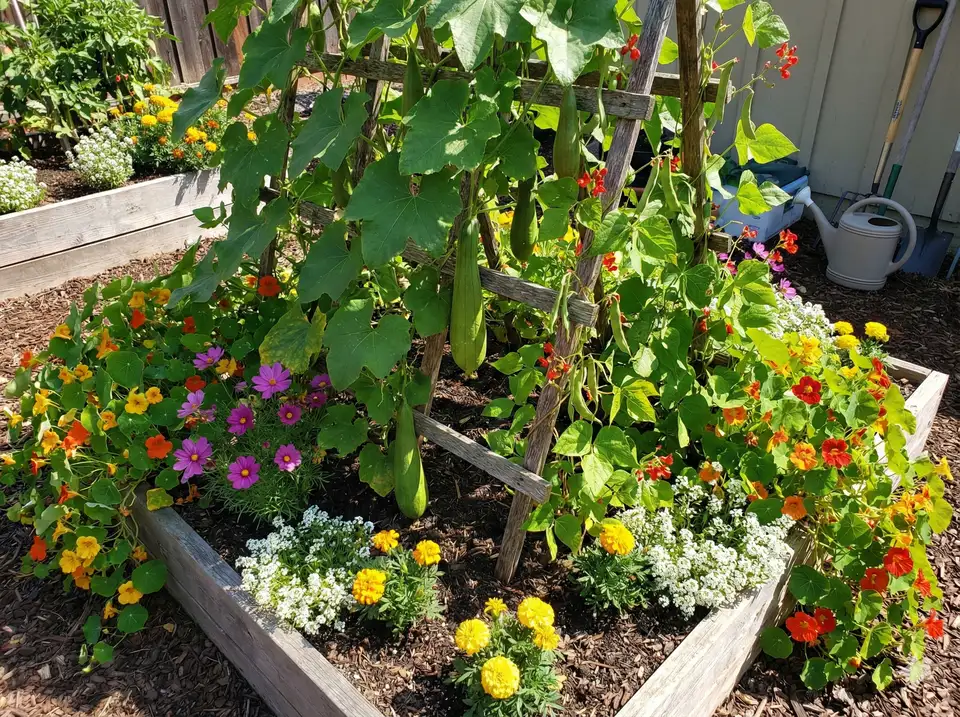
- Vertical layer: Loofah on trellis or tree (primary yield)
- Nitrogen fixers: Bush beans, peas, or perennial clover beneath (soil enrichment)
- Dynamic accumulators: Comfrey or yarrow at guild edges (nutrient mining and mulch)
- Aromatic herbs: Basil, oregano, or mint around base (pest confusion)
- Ground covers: Sweet potato vines or squash (living mulch, suppresses weeds)
- Deep-rooted companions: Sunflowers or amaranth (break up compaction, provide structure)
Timing the Guild Planting
Successful guild establishment requires understanding each plant's timing needs. Start nitrogen-fixing legumes 2-3 weeks before transplanting loofah seedlings. This gives them time to establish root systems and begin fixing nitrogen that loofah will utilize during its rapid growth phase.
Plant fast-growing ground covers like sweet potatoes simultaneously with loofah, as they spread quickly and provide immediate weed suppression. Add perennial guild members like comfrey in fall or early spring so they're established before annual planting begins.
Maximizing Vertical Space with Sustainable Loofah Growing
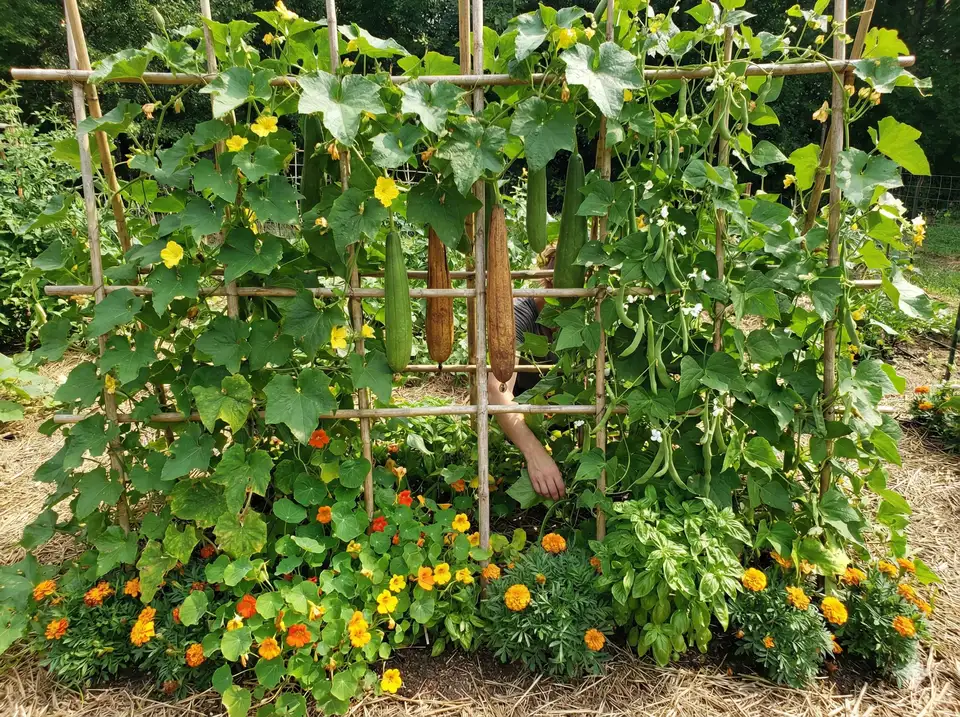
Vertical gardening is essential in permaculture for maximizing productivity per square foot. Loofah naturally excels in vertical systems, but strategic planning ensures optimal yields and system efficiency.
Calculating Your Vertical Capacity
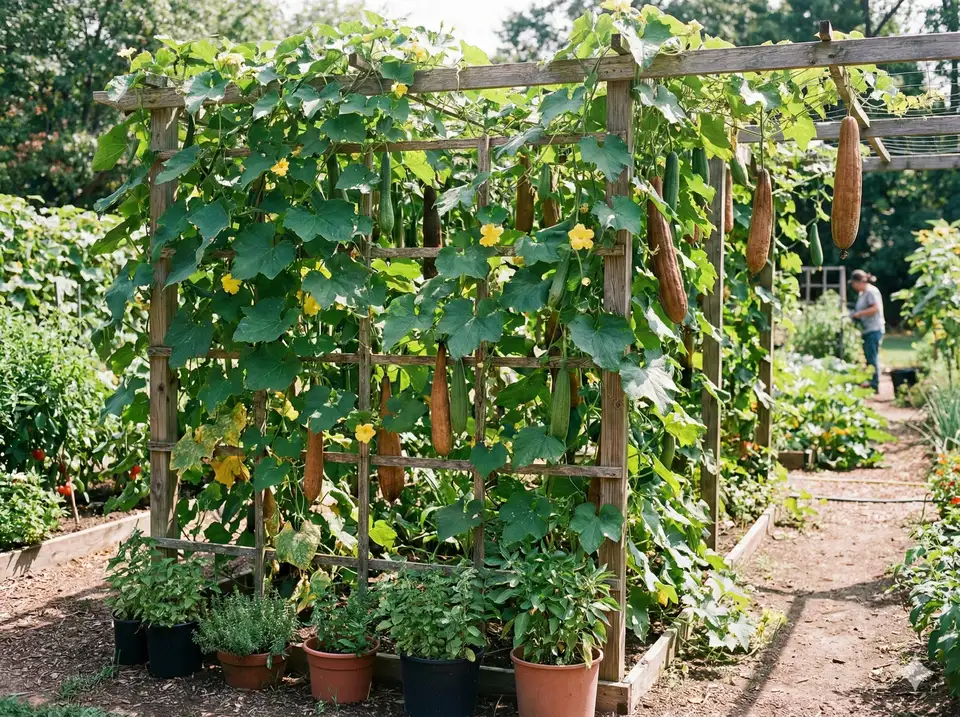
Each loofah plant needs 6-8 feet of horizontal trellis space and will climb 15-20 feet vertically under ideal conditions. Plan accordingly: a 12-foot cattle panel arched into a tunnel provides space for 2-3 robust plants. This vertical approach can yield 15-25 mature sponges from the same footprint that might grow only 2-3 tomato plants.
- Orient structures north-south: Maximizes sun exposure on both sides of vertical plantings
- Use sturdy support: Mature loofah with full fruit load can weigh 40+ pounds per plant
- Interplant shade-lovers below: Utilize the dappled shade created by loofah canopy
- Plan for airflow: Space plants adequately to prevent fungal issues in humid climates
- Consider harvest accessibility: Design structures that allow easy reach for picking
Harvesting Multiple Yields from One Plant
The concept of "stacking functions" is central to permaculture, and loofah exemplifies this principle by providing multiple useful products throughout its lifecycle. Understanding when and how to harvest each product maximizes your return on the space and resources invested.
Young Fruit as Food
Harvest young loofah at 4-6 inches long (about the size of a zucchini) for use as a vegetable. At this stage, the flesh is tender and mild-flavored, similar to cucumber or zucchini. Pick regularly to encourage continued flowering and fruit set. Each plant can provide 10-15 edible fruits if harvested young, or you can allow some to mature for sponges.
Biomass and Compost Material
After final harvest, the substantial plant biomass becomes valuable compost material. Loofah produces nitrogen-rich green matter perfect for hot composting. Chop vines into 6-12 inch pieces and layer with brown materials at a 1:2 ratio for optimal decomposition. Consider using all plant parts as mulch or soil amendment.
Seed Saving for Resilience
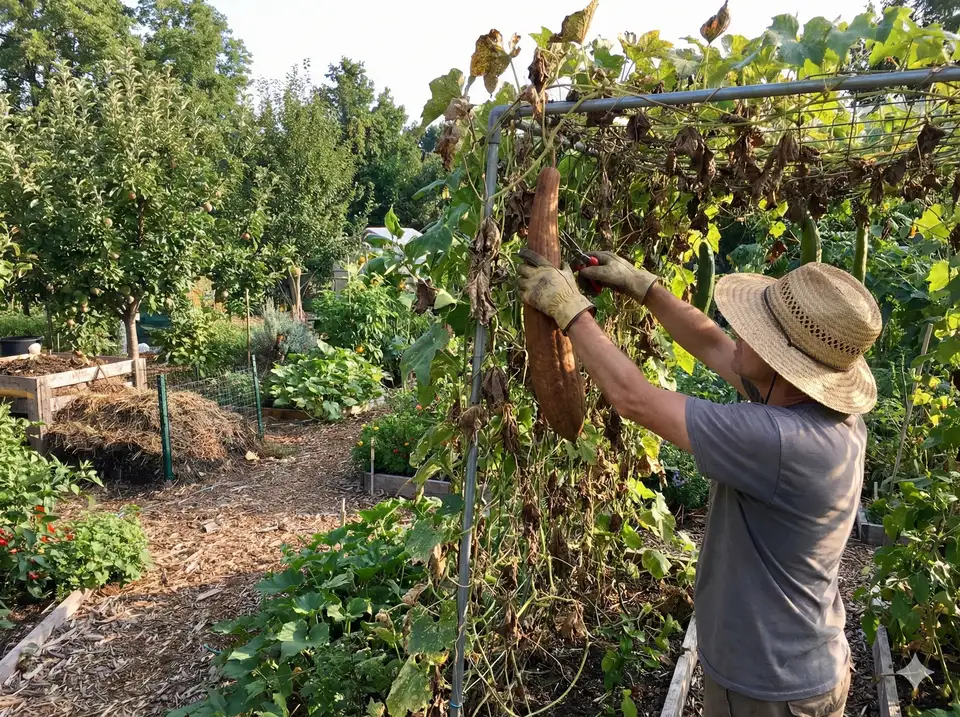
Select 2-3 of your best fruits for seed saving—choose those that showed disease resistance, high productivity, or other desirable traits. Allow these to dry completely on the vine, then extract and clean seeds. One fruit yields 50-100 seeds, ensuring abundance for sharing with community and expanding your planting next season.
Integrating Loofah with Other Permaculture Systems
Successful permaculture design connects multiple elements so each serves multiple functions. Loofah integrates beautifully with water management, composting systems, and livestock integration when thoughtfully planned.
Water Harvesting and Loofah Production
Loofah requires consistent moisture, making it ideal for positioning near swales, rain gardens, or greywater systems. Plant along the lower edge of swales where water naturally collects during rain events. The deep roots help stabilize swale berms while accessing stored moisture during dry periods.
Composting System Integration
Grow loofah on trellises positioned to shade compost bins during summer heat. This reduces excess moisture evaporation while utilizing the nutrient-rich zone around compost areas. The shade also benefits worm bins and helps maintain optimal composting temperatures. Embrace organic growing methods throughout your system.
Chicken Tractors and Livestock Integration
Build loofah trellises over chicken run areas to provide natural shade while producing crops. Chickens benefit from cooler summer conditions, while their manure provides fertility for overhead vines. Learn more about animal integration in loofah systems. Position plantings so fruits hang outside the run area for clean harvesting.
Frequently Asked Questions
Luffa aegyptiaca (smooth loofah) works exceptionally well in permaculture systems due to its vigorous growth, high yield potential, and dual-purpose nature as both food and sponge. It's more cold-tolerant than ridged varieties and produces consistent results. For food forests in warmer climates, consider growing both Luffa aegyptiaca and Luffa acutangula (ridged loofah) to extend harvest seasons and diversify yields.
Loofah needs 6-8 hours of direct sunlight for optimal fruit production, making it unsuitable for deep shade positions. However, it tolerates light dappled shade during the hottest part of the day, particularly in southern climates. Position loofah on the sunny edges of forest gardens or in clearings where sunlight penetrates. It can also climb into tree canopies from sunny positions, with vines extending into partial shade once established.
Loofah is an annual plant in temperate climates and doesn't typically become invasive since it dies with the first frost. However, in frost-free tropical zones, manage it by harvesting all mature fruits before seeds drop, removing volunteer seedlings promptly, and maintaining it in designated areas. The seeds require warm soil to germinate, giving you control over where it grows. Its well-behaved nature and lack of runners or spreading roots make it significantly easier to manage than many perennial vines.
Avoid planting loofah with heavy feeders that compete for similar nutrients, such as corn or large squash varieties in the same immediate area. Also avoid plants in the Cucurbitaceae family (cucumbers, melons, pumpkins) nearby as they share pest and disease susceptibilities, potentially amplifying problems. Keep loofah away from allelopathic plants like black walnut, which can inhibit its growth. Other cucurbits can work at guild edges but should not be interplanted directly beneath loofah trellises.
Loofah actually tolerates humidity better than many cucurbits, though powdery mildew and downy mildew can still occur. Maximize success in humid climates by ensuring excellent air circulation through proper spacing (8-10 feet between plants), choosing vertical structures that promote airflow, and avoiding overhead watering. Companion plant with aromatic herbs that have antifungal properties, and consider milk spray (1:9 milk to water ratio) as a preventative treatment. The naturally vigorous growth of loofah often allows it to outpace fungal issues when cultural conditions are optimized.