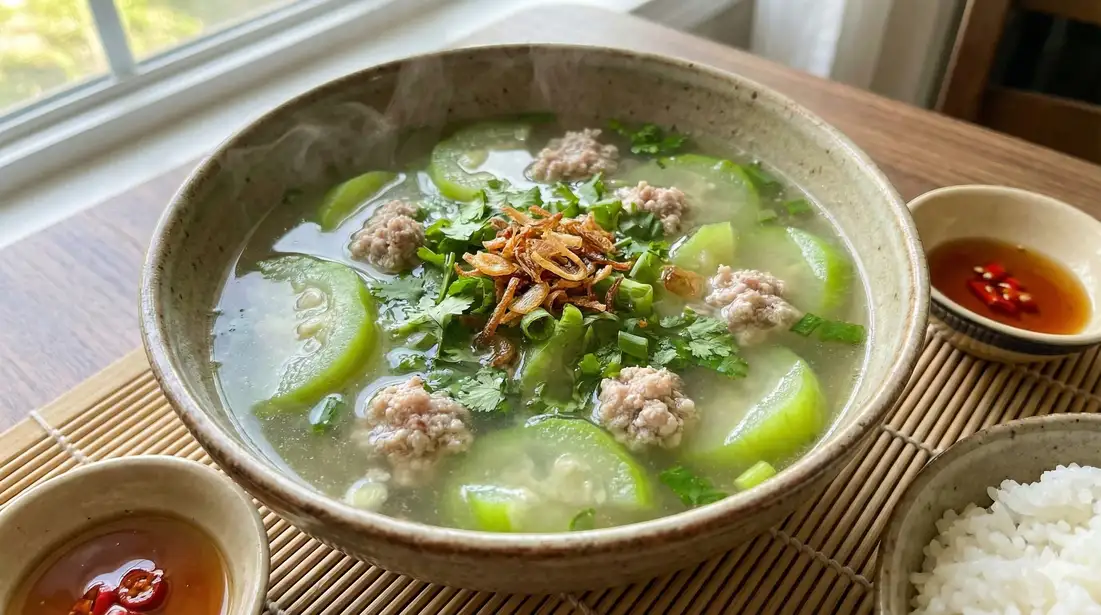
Luffa in Vietnamese Cuisine (Mướp)
In Vietnamese kitchens, luffa—known as mướp—holds a cherished place among everyday vegetables. Vietnamese cuisine celebrates fresh, seasonal produce, and young luffa gourds perfectly embody this philosophy with their delicate flavor and silky texture. Unlike the mature, fibrous luffa used for sponges, edible mướp is harvested young when the flesh is tender and slightly sweet. Understanding luffa cooking traditions helps appreciate its role in Vietnamese meals.
Vietnamese cooks prize mướp for its versatility and ability to absorb the aromatic flavors that define the cuisine: fish sauce (nước mắm), garlic, shallots, and fresh herbs. The vegetable's mild taste allows it to complement both land and sea proteins, making it a staple in home cooking throughout Vietnam. The flavor in Vietnamese dishes often depends on how well ingredients absorb seasoning, and luffa excels at this.

- Mướp hương: Smooth luffa (Luffa aegyptiaca), also called mướp tây - most common variety
- Mướp khía: Angled or ridged luffa (Luffa acutangula) - has distinct ridges along the length
- Harvest timing: Best when 4-6 inches long for tender texture
- Season: Peak availability during warm months (May-October)
Recommended Products for Vietnamese Cooking
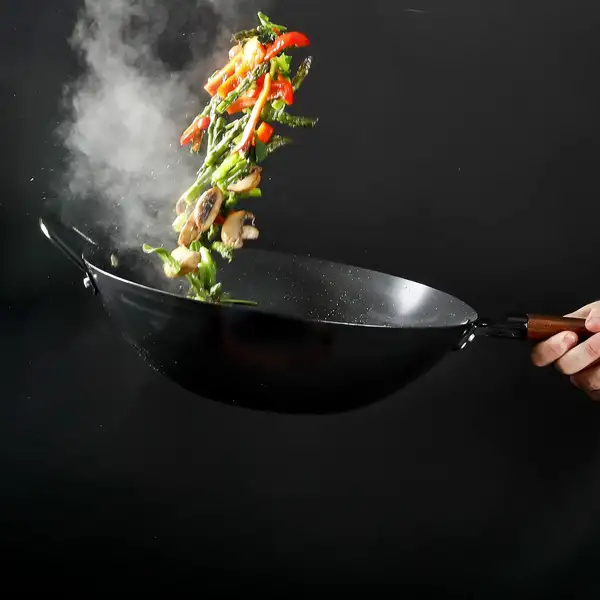
Babish Carbon Steel Flat Bottom Wok (14-Inch)
Restaurant-quality wok for authentic luffa stir-fry - works on all stovetops including induction
Check Price on AmazonAs an Amazon Associate, we earn from qualifying purchases.
Canh Mướp - Vietnamese Luffa Soup
Canh mướp represents the heart of Vietnamese home cooking—simple, nourishing, and prepared daily to accompany rice meals. This clear Vietnamese luffa soup showcases luffa's ability to soak up savory broth while maintaining its delicate texture. The soup is typically paired with protein like shrimp, pork, or crab for a complete meal.
Ingredients:
- 2 medium luffa (mướp), peeled and cut into chunks
- 12 oz shrimp, peeled and deveined
- 2 medium tomatoes, cut into wedges
- 4 cups chicken or seafood stock
- 3 cloves garlic, minced
- 1 shallot, thinly sliced
- 2 tablespoons fish sauce (nước mắm)
- 1 teaspoon sugar
- 2 scallions, cut into 1-inch pieces
- Fresh cilantro and Vietnamese coriander (rau răm) for garnish
Instructions:
- Heat a pot over medium-high heat, add a splash of oil and sauté garlic and shallot until fragrant (30 seconds)
- Add stock and bring to a boil
- Add tomato wedges and simmer for 3 minutes until they begin to soften
- Add luffa chunks and cook for 5 minutes until tender but not mushy
- Add shrimp and cook for 2-3 minutes until pink and cooked through
- Season with fish sauce, sugar, and black pepper to taste
- Add scallions in the final minute of cooking
- Serve hot, garnished with fresh cilantro and Vietnamese coriander
Tips: The soup should be clear and light. Don't overcook the mướp—it should be tender with a slight bite.
Mướp Xào Tỏi - Garlic Stir-Fried Luffa
Stir-frying is a quick Vietnamese stir fry method that preserves the fresh, crisp-tender texture of mướp. Mướp xào tỏi is a simple yet flavorful side dish that appears frequently at family meals. The high heat and brief cooking time keep the luffa from becoming waterlogged while allowing it to absorb the aromatic garlic and savory seasonings.

Ingredients:
- 2 medium luffa (mướp), peeled and sliced diagonally into 1/2-inch pieces
- 6 cloves garlic, minced
- 2 tablespoons vegetable oil
- 1 tablespoon fish sauce (nước mắm)
- 1/2 teaspoon sugar
- 1/4 cup water or chicken stock
- 2 scallions, cut into 1-inch pieces
- Black pepper to taste
Instructions:
- Heat wok or large skillet over high heat until very hot
- Add vegetable oil and swirl to coat the pan
- Add minced garlic and stir-fry for 15-20 seconds until golden and fragrant
- Immediately add luffa slices and stir-fry for 2 minutes, tossing constantly
- Add water/stock, fish sauce, and sugar; stir to combine
- Cover and cook for 2-3 minutes until luffa is tender but still slightly crisp
- Add scallions and stir-fry for 30 seconds
- Season with black pepper and serve immediately with steamed rice
- High heat is essential: Wok should be smoking hot before adding oil
- Work quickly: Have all ingredients prepped and ready before heating the wok
- Don't overcrowd: Cook in batches if needed to maintain high temperature
- Constant motion: Keep ingredients moving to prevent burning and ensure even cooking
Mướp Nhồi Thịt - Stuffed Luffa Vietnamese Style
Mướp nhồi thịt is a beloved Vietnamese comfort dish where luffa segments are hollowed out and filled with seasoned ground pork or shrimp, then braised in a savory tomato-based sauce. This dish showcases the luffa's ability to hold its shape while becoming tender and absorbing the rich flavors of the filling and sauce. Proper Vietnamese preparation techniques are key to success.
For the stuffed luffa:
- 3 large luffa (mướp), peeled and cut into 2-inch segments
- 12 oz ground pork (or ground shrimp)
- 2 oz wood ear mushrooms, soaked and finely chopped
- 1/2 onion, finely minced
- 2 cloves garlic, minced
- 1 tablespoon fish sauce
- 1 egg, beaten (to bind filling)
For the sauce:
- 2 medium tomatoes, diced
- 2 tablespoons tomato paste
- 1 cup chicken or pork stock
- 2 tablespoons fish sauce
- 2 scallions, chopped
Instructions:
- Hollow out the center of each luffa segment, leaving about 1/4-inch wall thickness
- Combine ground pork, mushrooms, onion, garlic, fish sauce, and egg; mix well
- Stuff each luffa segment with the meat mixture, packing firmly
- Sear stuffed segments in oil on both ends for 2 minutes until lightly browned
- Add tomatoes, tomato paste, stock, and fish sauce to the pan
- Simmer covered for 20-25 minutes until luffa is tender
- Garnish with scallions and serve hot with rice
Luffa in Vietnamese Clay Pot Dishes
Clay pot cooking (kho) is a traditional Vietnamese technique where ingredients are braised slowly in a clay pot with caramelized sugar, fish sauce, and aromatics. While meat and fish are the stars of most clay pot dishes, luffa is sometimes added in the final stages to absorb the rich, savory-sweet sauce. These techniques share similarities with East Asian luffa traditions.
Quick Method:
- Prepare your favorite Vietnamese cá kho (clay pot fish) recipe using catfish or salmon
- After the fish has braised for 20 minutes, add 1-2 peeled luffa cut into chunks
- Continue cooking for 10 minutes until luffa is tender and has absorbed the caramelized sauce
- The luffa adds a fresh contrast to the rich, sweet-savory fish
Key flavors: Caramelized sugar, fish sauce, garlic, black pepper, coconut water
Serving suggestion: Serve with steamed white rice and pickled vegetables
Fresh Luffa in Vietnamese Salads
While less common than cooked preparations, very young, tender luffa can be enjoyed raw in Vietnamese salads. The luffa is typically julienned or thinly sliced and dressed with lime juice, fish sauce, sugar, and fresh herbs for a refreshing side dish or appetizer.
- Choose very young luffa: Must be under 4 inches long and completely tender
- Peel thoroughly: Remove all skin and ridges for best texture
- Slice thinly: Julienne or use a mandoline for paper-thin slices
- Classic dressing: Fish sauce, lime juice, sugar, chili, and crushed peanuts
- Add herbs: Vietnamese mint (rau răm), cilantro, and Thai basil
- Serve immediately: Luffa will release water over time
Vietnamese Cooking Techniques for Luffa
Vietnamese cuisine employs specific techniques that bring out the best in mướp. Understanding these methods ensures your luffa dishes have authentic flavor and texture.
Preparation Essentials
Proper preparation is crucial for achieving the ideal texture in Vietnamese luffa dishes:
- Peeling method: Vietnamese cooks typically remove all dark green skin, leaving only the pale green flesh for a silkier texture
- Cutting technique: Diagonal slices (for stir-fries) or chunks (for soups) are most common
- Salt treatment: Some cooks lightly salt cut luffa for 5 minutes to draw out excess moisture, then rinse before cooking
- Immediate cooking: Cut luffa oxidizes quickly; prepare just before cooking for best color and flavor
Heat Control
Vietnamese cooking emphasizes precise heat control for different preparations:
- Stir-frying: High heat, quick cooking (3-5 minutes total) for crisp-tender texture
- Soups: Gentle simmer (5-7 minutes) added near the end to prevent mushiness
- Braising: Medium-low heat (20-25 minutes) for stuffed luffa to become tender while holding shape
- Steaming: Medium-high heat (8-10 minutes) for delicate, silky texture
Flavor Building
Vietnamese cuisine builds complex flavors through layering aromatics and seasonings:
- Aromatics first: Always sauté garlic, shallots, or onions until fragrant before adding luffa
- Fish sauce timing: Add during cooking to allow flavors to meld, not just at the end
- Sugar balance: A small amount of sugar balances the salty fish sauce and enhances luffa's natural sweetness
- Fresh herb finish: Add scallions, cilantro, and other herbs in the final moments for bright flavor
- Black pepper preference: Vietnamese cuisine favors black pepper over white for luffa dishes
Serving Luffa Vietnamese Style
In Vietnamese meals, luffa dishes are served as part of a family-style spread where multiple dishes complement each other.
Traditional Serving Format
Vietnamese meals follow the cơm (rice-based) format with specific roles for each dish:
- Main protein: Grilled meat, fish, or braised dish serves as the centerpiece
- Vegetable dish (rau): Mướp stir-fry or soup provides fresh, light contrast
- Soup (canh): Canh mướp adds moisture and cleansing flavors to the meal
- Rice (cơm): Steamed white rice is the foundation of the meal
- Condiments: Fish sauce with chili and lime, pickled vegetables on the side
Pairing Suggestions
- Canh mướp pairs with: Grilled pork chops (sườn nướng), fried fish, or lemongrass chicken
- Mướp xào tỏi complements: Rich, braised dishes like thịt kho or cá kho
- Mướp nhồi thịt serves as: A complete meal with rice and pickled vegetables
- Beverage pairings: Iced tea (trà đá), Vietnamese iced coffee (cà phê sữa đá), or light beer
Frequently Asked Questions
Mướp hương (smooth luffa) has a cylindrical shape with smooth, light green skin and is the most commonly used variety in Vietnamese cooking. Mướp khía (angled luffa) has prominent ridges running along its length and a slightly more fibrous texture. Both can be used interchangeably in most recipes, though smooth luffa is preferred for soups and stuffed dishes due to its more delicate texture.
While zucchini can work as a substitute, the results will differ. Luffa has a more porous, sponge-like texture that absorbs flavors better than zucchini. Zucchini also releases more water when cooked and has a firmer texture. If substituting, use young zucchini, cook it slightly less than the recipe indicates for luffa, and expect a different but still delicious result. Chayote squash is a closer substitute to luffa in texture.
Add luffa chunks to the soup only in the final 5-7 minutes of cooking and maintain a gentle simmer rather than a rolling boil. Cut luffa into larger chunks (1-1.5 inches) as they'll hold their shape better. Don't stir the soup too vigorously once the luffa is added. The luffa should be tender enough to pierce with a fork but still maintain structure—slightly crisp-tender is ideal.
Fresh luffa is readily available at Asian grocery stores, particularly Vietnamese, Chinese, or Southeast Asian markets. Look in the fresh produce section, often near other Asian vegetables like bok choy and Chinese broccoli. Some farmers markets carry luffa during summer and fall months. If you can't find fresh luffa, consider growing your own—luffa plants are easy to grow in warm climates and produce abundantly.