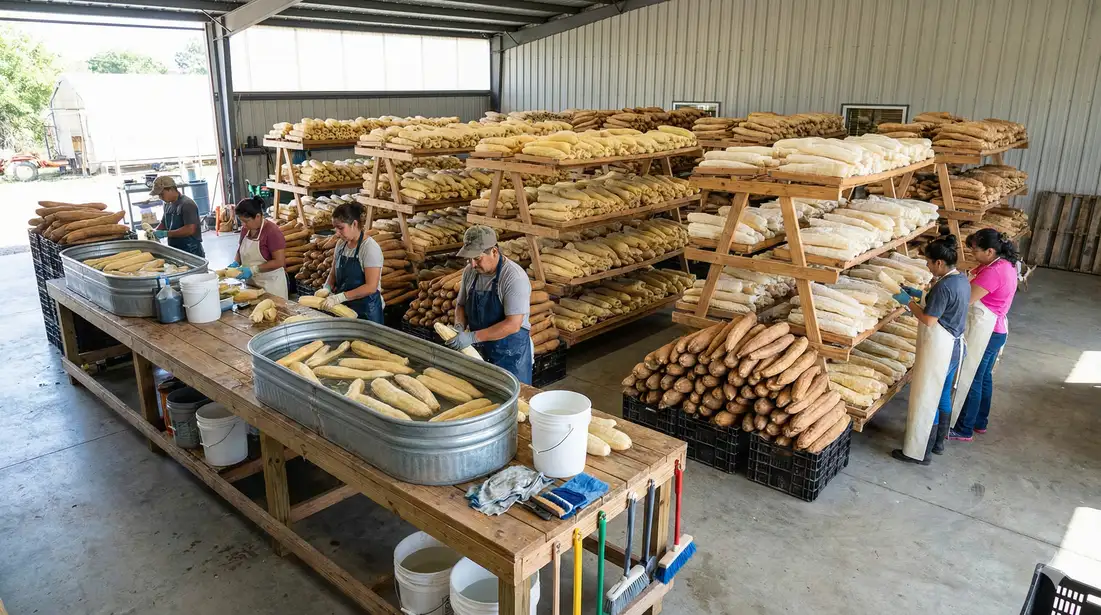
Processing one or two loofah at a time is fine for hobby growers, but what if you have 50, 100, or even 500 gourds to process? Whether you're a market grower, craft seller, or just had an exceptionally productive season, batch processing saves massive amounts of time and effort.
This guide covers efficient assembly-line techniques used by commercial growers and serious hobbyists to process large harvests quickly and consistently. If you're new to loofah processing, start with our basic processing guide to learn the fundamentals before scaling up to batch operations.
Start Your Loofah Growing Journey
KVITER Heirloom Luffa Seeds (40 Count)
Fast-sprouting non-GMO seeds with 90%+ germination - grow your own natural sponges in one season
Buy on Amazon
BN-LINK Seedling Heat Mat for Faster Germination
Cuts loofah germination time in half - waterproof design maintains optimal 75-85°F soil temperature
Buy on AmazonAs an Amazon Associate, we earn from qualifying purchases.
The Batch Processing Workflow
The key to efficient batch processing is treating it like an assembly line. Instead of completing one loofah start-to-finish before starting the next, you move batches through sequential stations.
Follow this order: Harvest → Sort → Soak → Peel → Seeds → Wash → Bleach → Dry
Each station handles one part of the process. While one batch soaks, you peel the previous batch. This overlap dramatically speeds up total processing time.
Process 10-20 gourds at a time through each station before moving on. This is more efficient than processing one gourd completely before starting the next.
Equipment for Batch Processing
Having the right equipment makes batch processing efficient and enjoyable. Here's what you'll need:
- Large Tubs or Barrels (2-3) - 50+ gallon containers for soaking and washing
- Garden Hose with High-Pressure Nozzle - Blasts off debris and seeds effectively
- Mesh Laundry Bags (Large) - Perfect for moving batches between stations
- Stackable Drying Racks - Maximize drying space for entire harvest
- Heavy-Duty Rubber Gloves - Protect hands during extended processing
- Hydrogen Peroxide (Bulk - 1 Gallon) - 3% solution for natural bleaching
- 5-Gallon Buckets with Lids - For seed collection and storage
Setting Up Processing Stations
Arrange your workspace in a logical flow, ideally outdoors with good drainage. Each station should have dedicated tools and containers.
- Separate fully dry (brown, lightweight) from still-green gourds
- Set aside any moldy or damaged gourds
- Group by size for consistent batches
- Remove any remaining vine or stem material
Time: 15-20 minutes per 50 gourds
See also: When to Harvest Loofah for identifying mature gourds
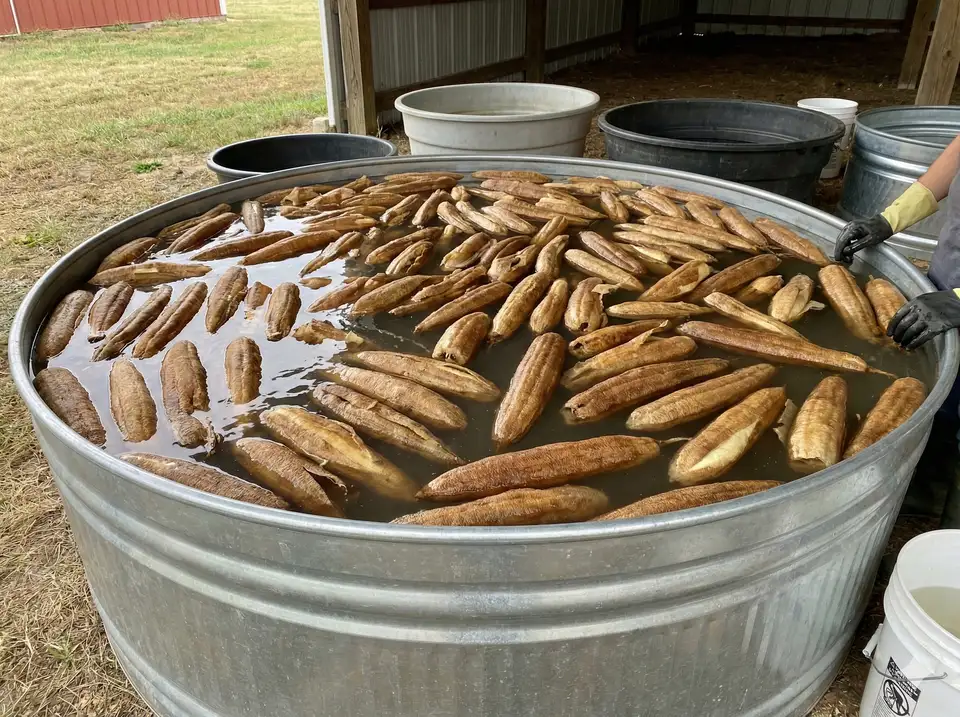
- Fill large tub with warm water
- Submerge 10-20 gourds at a time (use weights if needed)
- Soak 15-30 minutes for dry gourds, less for fresher ones
- Rotate batches—while one soaks, peel the previous batch
Pro tip: Change water between batches if it gets murky
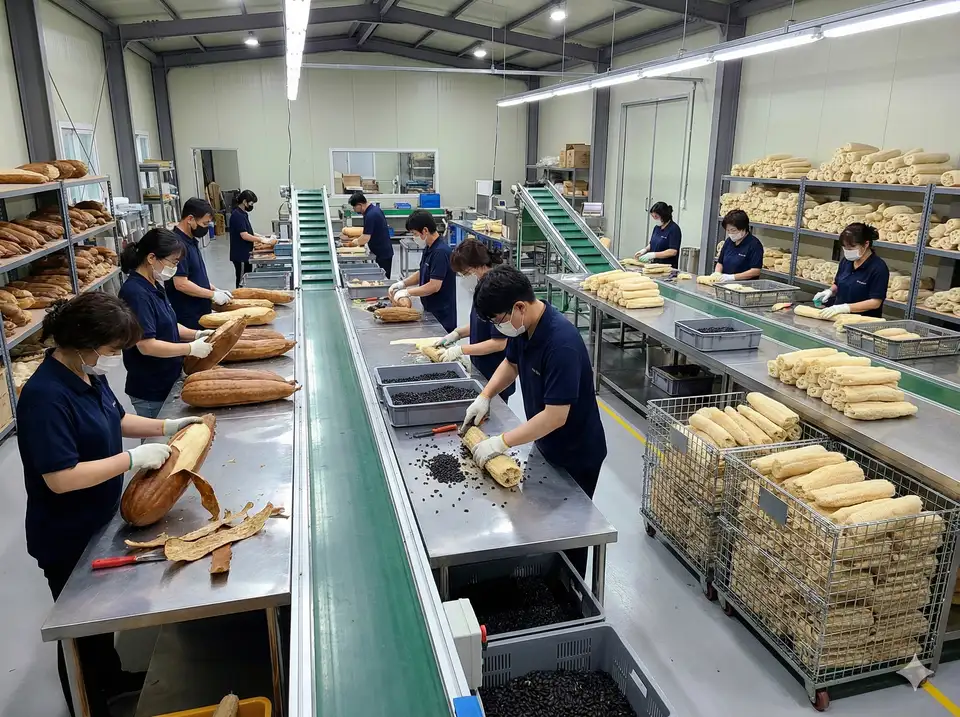
- Work over a tarp or compost bin to catch debris
- For dry gourds: crack and peel in sections
- For wet gourds: peel skin off like a banana
- Don't worry about perfection—washing removes residue
Time: 1-2 minutes per gourd once you get rhythm
- Shake gourds firmly—most seeds will fall out
- Use a stick or dowel to knock out stubborn seeds
- Collect seeds in bucket—save for planting or selling
- Don't obsess over every seed—some can be washed out later
Seeds per gourd: 50-200+ (valuable for next season!)
Learn more: How to Save and Store Loofah Seeds
- Use high-pressure hose spray inside and out
- Alternatively, agitate in clean water tub
- Squeeze and release repeatedly to flush interior
- Continue until water runs clear
For stubborn sap: Brief soak in soapy water helps
- Mix hydrogen peroxide solution: 1 part 3% H2O2 to 3 parts water
- Submerge loofah for 30-60 minutes
- Or: lay out in direct sun for natural bleaching (takes longer)
- Skip this station if selling "natural" unbleached loofah
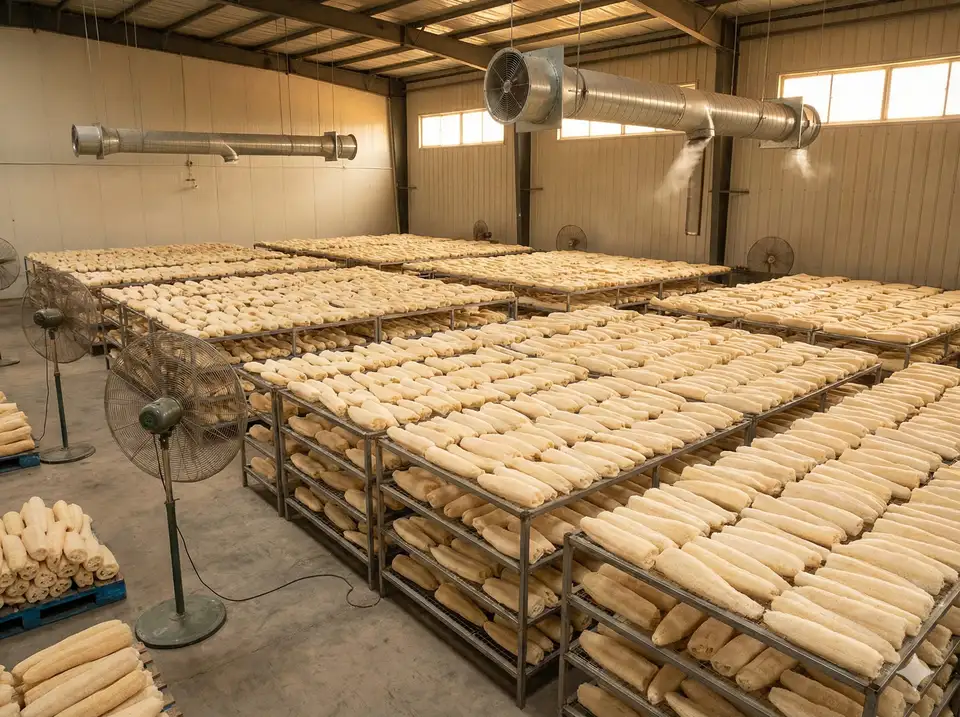
- Arrange on racks, screens, or hang from lines
- Ensure good airflow around each piece
- Rotate or flip after 12-24 hours
- Dry 2-5 days depending on humidity and method
Timing Your Processing Day
Here's a realistic schedule for processing 50 loofah in a single day:
| Time | Activity | Notes |
|---|---|---|
| 8:00 AM | Setup stations, start soaking Batch 1 | Get water warming if possible |
| 8:30 AM | Sort and prep remaining gourds | While Batch 1 soaks |
| 9:00 AM | Peel Batch 1, start soaking Batch 2 | Overlap keeps flow moving |
| 9:30 AM | Seeds + wash Batch 1, peel Batch 2 | Assembly line in motion |
| 10:00 AM | Bleach Batch 1, continue processing | Batch 1 can sit in bleach |
| 12:00 PM | Lunch break, Batch 1 to drying | First batch complete! |
| 1:00-5:00 PM | Continue processing remaining batches | Rhythm gets faster |
| 5:00 PM | Last batch to drying, cleanup | All 50+ done! |
For 100+ gourds, spread over 2-3 days. Unprocessed gourds store fine for weeks if kept dry. Don't rush quality for speed.
Efficiency Tips from Experienced Growers
Work Smart, Not Hard
Processing loofah is repetitive work, so make it enjoyable with music or podcasts in the background. Pay attention to your physical setup—the right table height saves your back over a long day. Keep tools sharp; a dull knife or scraper slows you down and causes hand fatigue. Most importantly, take short breaks every hour to stretch and reset. Five minutes of rest prevents the burnout that leads to sloppy work.
Speed Optimizations
The biggest time-saver happens before processing even begins: gourds that have fully dried on the vine (brown and lightweight) peel dramatically faster than those harvested green. Learn about optimal harvest timing to maximize efficiency. During processing, don't chase perfection on the first pass—"good enough" works for initial washing, and you can refine later. Batch similar-sized gourds together for consistent handling rhythm. If you have help available, a two-person team where one peels while the other washes can nearly double your throughput.
Processing is physical work! Start with a manageable batch (30-50) for your first time. Overcommitting leads to rushed work and lower quality.
Quality Control During Batch Processing
When processing at volume, it's tempting to rush through and deal with quality later—resist that urge. Grade your loofah as you go, sorting into A (perfect for sale), B (minor flaws, still usable), and C (craft use only). Set aside any moldy or damaged pieces immediately; they shouldn't sit with clean batches where problems can spread. The most critical checkpoint is drying—one damp sponge tucked into storage can mold an entire batch within days. Always do a final inspection of all dried loofah before packaging or storing.
Common Batch Processing Issues
| Issue | Cause | Solution |
|---|---|---|
| Skin won't peel | Not soaked enough | Extend soak time or use warmer water |
| Sap residue | Incomplete washing | Second wash with soap, then rinse |
| Musty smell | Incomplete drying | Re-wash and dry thoroughly |
| Seeds stuck inside | Fiber matrix holding them | Squeeze underwater, shake vigorously |
| Uneven color | Inconsistent bleaching | Fully submerge, rotate during process |
Post-Processing Storage
After investing hours into batch processing, proper storage protects your work. First and foremost, verify that every single loofah is completely bone-dry before storing—refer to our drying guide for testing methods. Store in breathable containers like paper bags, cardboard boxes, or mesh bags; plastic traps moisture and invites mold. Label each batch with the processing date and grade for easy inventory tracking. For the first few months, check stored loofah monthly for any signs of mold or pest activity.
Store finished loofah in grades. This makes packaging orders faster—grab from the appropriate bin rather than sorting through mixed inventory. See our complete storage guide for more details.
Scaling to Commercial Production
If you're processing for market or significant craft production, the techniques in this guide and our standard processing guide form a solid foundation—but you'll need to scale up. Invest in larger equipment: bigger soaking tubs, a pressure washer for faster cleaning, and commercial-grade drying racks. Document your exact process so you can maintain consistent quality batch after batch. Track your time per unit carefully; knowing your true labor costs is essential for profitable pricing. As volume grows, consider bringing in helpers—loofah processing is straightforward work that's easy to teach, and an extra pair of hands transforms what feels like an overwhelming harvest into a manageable operation.