
Companion planting is the practice of growing certain plants together to create beneficial relationships. For loofah growers, strategic companion planting can attract pollinators, deter pests, improve soil health, and maximize garden space - all while producing healthier vines and bigger harvests. When combined with organic growing methods, companion planting creates a sustainable ecosystem in your garden.
This guide covers the best plants to grow alongside your loofah, plants to avoid, and practical garden layouts that put companion planting into action. For a comprehensive overview of loofah cultivation, see our complete growing guide.
Recommended Companion Planting Products
KVITER Heirloom Luffa Seeds (40 Count)
Fast-sprouting non-GMO seeds with 90%+ germination - grow your own natural sponges in one season
Buy on Amazon
Twira Heavy-Duty Metal Garden Arch Trellis (7.9FT)
Rust-proof galvanized steel supports 100+ lbs of loofah vines - easy assembly with ground stakes
Buy on AmazonAs an Amazon Associate, we earn from qualifying purchases.
Best Companion Plants for Loofah
These plants provide specific benefits when grown near loofah vines:
Corn
Excellent companion
- Tall stalks provide natural trellis
- Creates "Three Sisters" planting with beans
- Provides partial shade in hot climates
- Different root depths = no competition
Sunflowers
Excellent companion
- Attracts bees for better pollination
- Tall stalks can support loofah vines
- Bright flowers draw beneficial insects
- Seeds attract birds that eat pests
Pole Beans
Excellent companion
- Fix nitrogen in soil for loofah
- Can share same trellis structure
- Provide ground cover reducing weeds
- Harvest continues after loofah finishes
Marigolds
Very good companion
- Strong scent deters cucumber beetles
- Root secretions repel nematodes
- Attracts hover flies that eat aphids
- Adds color around loofah base
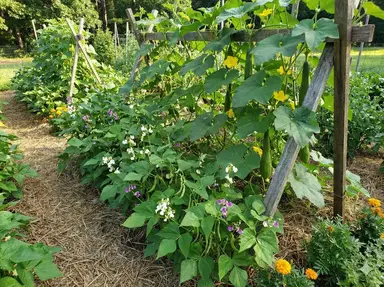
More Great Companions
Nasturtiums
Trap crop for aphids; edible flowers; ground cover suppresses weeds
Radishes
Quick harvest before loofah fills space; loosens soil; marks rows
Lettuce & Spinach
Grow in loofah's shade as vines mature; living mulch; no competition
Borage
Top pollinator attractor; adds trace minerals to soil; edible flowers

Companion planting succeeds through several mechanisms. Mixed plantings confuse pests, making it harder for them to locate host plants in a diverse garden. Flowering companions attract pollinators to boost your loofah fruit set while also drawing predatory insects that naturally control pest populations. Different growth habits - tall corn, climbing beans, spreading nasturtiums - utilize both vertical and horizontal space efficiently. Meanwhile, legumes like pole beans add nitrogen to the soil while deep-rooted plants bring minerals up from below.
Plants to Avoid Near Loofah
Some plants compete with loofah, share diseases, or attract the same pests. Keep these away from your loofah vines:
Cucumbers
Same cucurbit family = shared pests; both attract cucumber beetles; compete for pollinators
Melons & Squash
Share bacterial wilt and vine borers; heavy feeders compete for nutrients; vines tangle
Potatoes
Heavy nitrogen feeders; root disturbance during harvest; can harbor cucurbit diseases
Fennel
Inhibits growth of most nearby plants; allelopathic chemicals affect cucurbits; isolate fennel

Loofah is part of the Cucurbitaceae family, which includes cucumbers, melons, squash, and pumpkins. While you can grow these in the same garden, keep them at least 25-50 feet apart to:
- Reduce disease spread (bacterial wilt, powdery mildew)
- Minimize pest concentration (cucumber beetles move between plants)
- Allow for crop rotation in following years
Quick Reference Table
| Plant | Compatibility | Main Benefit/Issue |
|---|---|---|
| Corn | Excellent | Natural trellis, Three Sisters planting |
| Sunflowers | Excellent | Pollinator attraction, vine support |
| Pole Beans | Excellent | Nitrogen fixation, shared trellis |
| Marigolds | Very Good | Pest deterrent, nematode control |
| Nasturtiums | Very Good | Aphid trap crop, ground cover |
| Radishes | Good | Quick harvest, soil loosening |
| Lettuce | Good | Shade tolerant, living mulch |
| Borage | Good | Pollinator magnet |
| Tomatoes | Neutral | No benefit or harm; watch spacing |
| Peppers | Neutral | No benefit or harm; watch spacing |
| Cucumbers | Avoid | Shared pests and diseases |
| Melons | Avoid | Shared pests, space competition |
| Squash | Avoid | Same family, same problems |
| Potatoes | Avoid | Nutrient competition, root disturbance |
| Fennel | Avoid | Inhibits growth of nearby plants |
Companion Planting Layouts

Here are practical garden designs that maximize companion planting benefits:
- Corn: Plant in a block of 4x4 or more for pollination
- Loofah: Plant 2-3 feet from corn, trained to climb stalks
- Pole Beans: Plant between corn and loofah to fix nitrogen
- Back: Sunflowers (tallest) along north side
- Middle: Loofah on trellis running east-west
- Front: Marigolds and borage at trellis base
- Inner: Loofah vines on central trellis
- Middle: Nasturtiums (trap crop for aphids)
- Outer: Marigolds (deter cucumber beetles)
- Spring: Plant radishes and lettuce in loofah bed
- Mid-spring: Transplant loofah between greens
- Summer: Harvest greens as loofah takes over
Spacing & Placement Tips
Proper spacing ensures companions help rather than hinder loofah growth:
- Tall companions (corn, sunflowers): 2-3 feet from loofah base
- Climbing companions (beans): Can share same trellis, offset by 6-12 inches
- Border plants (marigolds, nasturtiums): 12-18 inches from loofah
- Ground cover (lettuce, radishes): Can plant under trellis early season
- Plants to avoid: Keep at least 25-50 feet from other cucurbits
Placement Considerations
Sun exposure is critical - never let companions shade your loofah, which needs full sun to thrive. Place tall plants like corn and sunflowers on the north side of your garden bed so they don't block light. Group plants with similar water requirements together to simplify irrigation, and remember that deep-rooted plants like corn coexist better with loofah than shallow-rooted competitors. Finally, always leave paths between plantings so you can reach your loofah for harvest and regular maintenance.
Companion Planting in Containers
If you're growing loofah in containers, you can still benefit from companion planting, though your options are more limited. Within the same container, stick to small companions like marigolds planted around the base - and only if you're using a larger container with room to spare.
For better results, place pollinator-attracting plants in adjacent containers. Borage and dwarf sunflowers in separate pots positioned nearby will draw bees to your loofah flowers without competing for root space. Avoid crowding your loofah container with other plants, as root space is already limited. Your best strategy is a ring of marigolds in small pots around the container base, which deters pests while keeping roots separate.
Organic Growing Synergy
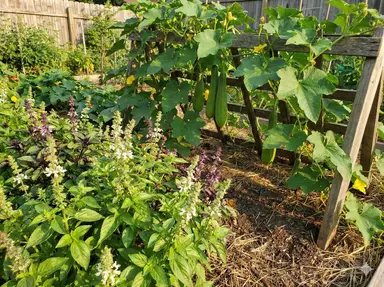
Companion planting is a cornerstone of organic loofah growing. By attracting beneficial insects with flowering companions like marigolds and borage, you can control pests naturally without reaching for pesticides. Nitrogen-fixing beans and mineral-accumulating plants like borage improve your soil over time, reducing or eliminating the need for synthetic fertilizers. Ground-cover companions like lettuce and nasturtiums act as living mulch, suppressing weeds organically so you never need herbicides.
This holistic approach not only produces healthier loofah sponges but also creates a more resilient garden ecosystem that requires less intervention over time. Once established, a well-designed companion planting scheme becomes largely self-sustaining.