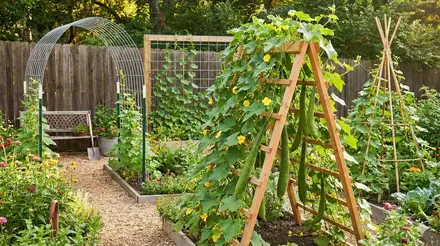
My first loofah trellis was a tomato cage. By July, it had collapsed into a tangled heap with the vine still growing, sprawling across the ground and picking up every disease in the garden. I learned an expensive lesson: loofah isn't like other vines.
These plants are climbers that mean business. A single mature vine can reach 30 feet, weigh over 100 pounds with fruit, and grab anything within reach with tendrils that could double as cable ties. The trellis you'd use for cucumbers or beans won't survive a week with loofah.
This guide covers every trellis option that actually works—from cheap DIY solutions to permanent garden structures. I'll tell you what I've tested, what failed, and what I'd recommend based on your budget and space.
Top Trellis Materials
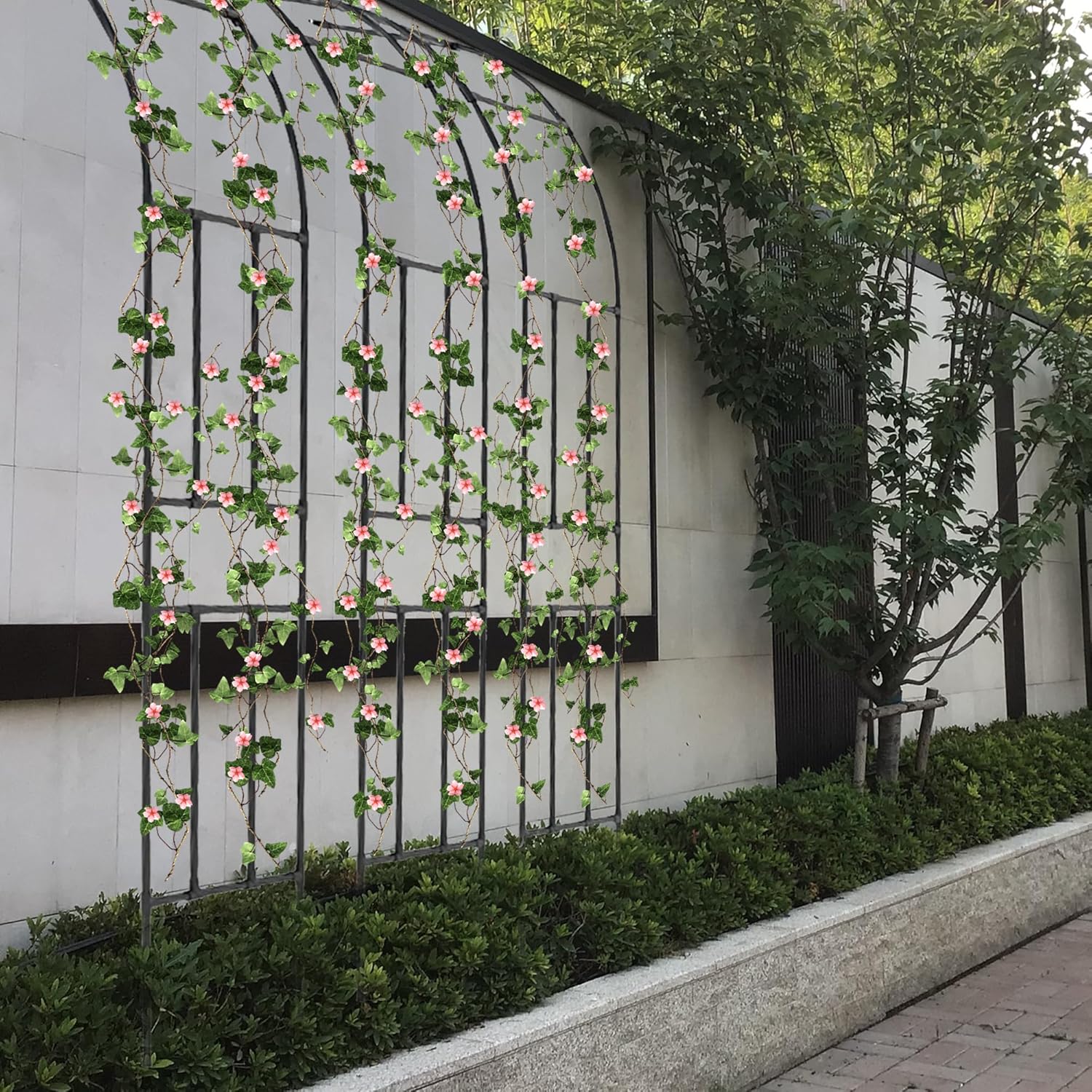
Twira Heavy-Duty Metal Garden Arch Trellis (7.9FT)
Rust-proof galvanized steel supports 100+ lbs of vines and fruit. Perfect height for loofah's vigorous growth.
Check Price on Amazon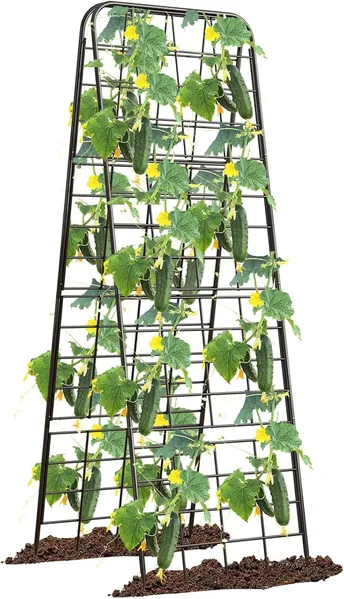
Heavy-Duty Adjustable A-Frame Trellis
Rust-proof metal frame that folds flat for storage. Adjustable height and width to fit any garden space.
Check Price on AmazonAs an Amazon Associate, we earn from qualifying purchases. See all our trellis recommendations →
Why Loofah Absolutely Needs a Trellis
Technically, loofah will grow without support. It'll crawl along the ground, covering everything in its path. But ground-grown loofah has serious problems:
- Disease central: Leaves touching soil pick up fungal spores. Powdery mildew and bacterial wilt spread fast.
- Curved, dirty gourds: Fruit lying on the ground grows crooked and stains. Good luck getting those clean.
- Pest buffet: Slugs, ground beetles, and rodents have easy access to your harvest.
- Pollination problems: Flowers hidden under leaves don't get visited by bees as often.
- Harvesting nightmare: Finding mature gourds under a tangle of vines is frustrating and often results in missed harvests.
Vertical growing solves all of this. Air circulation keeps leaves dry, gourds hang straight and clean, pollinators find flowers easily, and you can spot ripe fruit from across the garden.
What Makes a Good Loofah Trellis
Before looking at specific designs, understand what loofah demands from any support structure:
Loofah vines reach 15-30 feet. An 8-foot trellis is the minimum—vines will grow over the top and cascade down. A 10-15 foot structure lets vines spread without piling up. More height means more growing surface and more gourds.
A productive loofah plant with 15-25 gourds can weigh 75-100 pounds. Add wind load and the leverage of vines at the top, and weak structures fail spectacularly. Overbuilt is better than collapsed mid-season.
Loofah climbs using tendrils that wrap around anything thin enough to grab. Solid walls don't work. Wire grid, netting, or string spaced 4-6 inches apart gives tendrils plenty of attachment points.
A loaded trellis acts like a sail in wind. Posts need to be buried 2-3 feet deep or anchored to concrete footings. Guy wires help stabilize tall structures. Don't underestimate wind—I've seen trellises topple overnight.
Cattle Panel Trellis: The Budget King
If you ask experienced loofah growers what they use, most will say cattle panels. These heavy-gauge galvanized wire grids (also called livestock panels) check every box at a fraction of the cost of other options.
Why Cattle Panels Work So Well
- Incredibly strong: Designed to contain 1,000-pound animals. Loofah doesn't stand a chance.
- Perfect grid size: 4x4" or 6x6" openings are ideal for tendril attachment.
- Flexible: Can be bent into arches, tunnels, or A-frames.
- Affordable: $25-40 for a 16-foot panel at farm supply stores.
- Durable: Galvanized coating lasts 15-20+ years outdoors.
Basic Cattle Panel Arch Setup
The most popular configuration is bending a single panel into an arch:
- Purchase a 16' x 50" cattle panel (about $30-40 at Tractor Supply, Rural King, or similar)
- Drive T-posts 2 feet deep on each side, spaced about 4 feet apart
- Bend the panel into an arch shape and secure to T-posts with wire
- Result: An 8-foot tall arch tunnel roughly 4 feet wide
Total cost: Under $60 including posts. Time: 1-2 hours.
Cattle Panel Flat Trellis
If an arch doesn't fit your space, use panels flat:
- Set 4x4 wooden posts or heavy T-posts 8-10 feet apart, sunk 2-3 feet deep
- Attach panel vertically between posts using heavy-duty wire or U-bolts
- Add a horizontal support beam across the top for extra stability
This creates a solid wall of climbing space. You can connect multiple panels for longer runs.
A-Frame Trellis
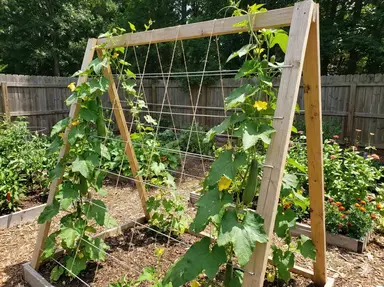
A-frames offer stability and double-sided growing space without needing permanent installation. They're great for renters or gardeners who rotate growing areas.
Building an A-Frame
The basic design uses two matching frames leaned against each other:
- Frame size: Each side 8-10 feet tall, 4-6 feet wide
- Materials: 2x4 lumber or metal conduit for frame, wire mesh or string for climbing surface
- Angle: 60-70 degrees from ground provides stability
- Connection: Hinges at top allow folding for storage, or bolt together for permanent install
Pros and Cons
| Pros | Cons |
|---|---|
| Self-supporting (no posts to dig) | Takes more ground space than vertical trellis |
| Can fold for storage | Limited height (usually 8-10 feet max) |
| Two-sided growing space | Needs stakes in windy areas |
| Creates shaded area underneath | More complex to build than flat trellis |
Arbor and Pergola Trellises
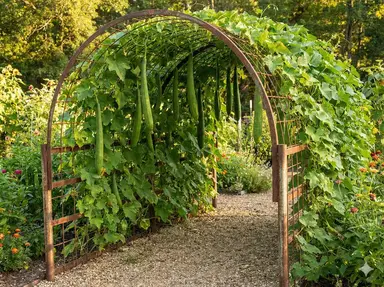
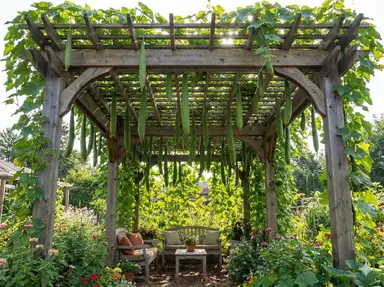
For gardeners who want function and beauty, metal or wooden arbors make stunning loofah supports. The vines cover the structure, creating a living tunnel with hanging gourds.
What to Look For
- Height: 8+ feet at peak minimum (10+ is better)
- Material: Powder-coated steel holds up best. Wooden arbors work but may rot at ground contact.
- Weight rating: Look for "heavy-duty" rated for climbing plants, not just decoration.
- Top design: Flat or arched tops with lattice/grid work best. Solid tops block sun.
Cost Range
Quality metal arbors suitable for loofah run $150-400. DIY wooden pergolas using 4x4 posts and 2x4 cross-members can be built for $100-200 in materials. Either option lasts years and adds garden value beyond loofah growing.
Fence and Wall Trellising
Already have a sturdy fence? It might work for loofah—with some modifications.
Chain Link Fences
Chain link is nearly perfect for loofah. The diamond pattern gives tendrils unlimited attachment points, and the metal is strong enough for heavy vines. Main limitation is height—most are only 4-6 feet tall.
Solution: Add extension posts and run additional wire or netting above the existing fence to reach 8-10 feet.
Wooden Privacy Fences
Solid wood fences don't work—tendrils have nothing to grab. Add wire mesh or trellis netting to the face of the fence, creating a climbing surface. Secure at top and bottom to prevent sagging under weight.
Brick or Concrete Walls
Same solution as wooden fences: mount wire grid or heavy-duty trellis netting using masonry anchors. Leave 2-3 inches of space between wall and grid for air circulation and easier harvesting.

Trellis Comparison Chart
| Trellis Type | Cost | DIY Difficulty | Height | Best For |
|---|---|---|---|---|
| Cattle Panel Arch | $40-60 | Easy | 8-10 ft | Best value overall |
| Cattle Panel Flat | $50-80 | Easy | 5-8 ft | Long runs, multiple plants |
| A-Frame | $80-150 | Medium | 8-10 ft | Portable, renters |
| Metal Arbor | $150-400 | None (buy) | 8-10 ft | Decorative gardens |
| DIY Pergola | $100-250 | Hard | 8-12 ft | Permanent, large spaces |
| Fence Extension | $30-60 | Easy | 8-10 ft | Using existing fence |
Common Trellis Mistakes to Avoid
Using tomato cages or small trellises
Tomato cages are designed for 5-foot plants weighing a few pounds. Loofah will pull them out of the ground by July. Don't even try—it's not worth losing your crop.
Underestimating weight
A single plant with 20 gourds, each weighing 2-3 pounds, plus dense foliage easily exceeds 75 pounds. Add rain-soaked leaves and wind leverage. If your structure seems "probably strong enough," it probably isn't.
Shallow post installation
Posts need to be buried 2-3 feet deep, or set in concrete. A 1-foot deep post hole will fail when wind hits a vine-loaded trellis. Dig deeper than you think necessary.
Installing too late
Have your trellis ready before transplanting, not after. Once loofah starts growing, it's nearly impossible to guide established vines onto support without damaging them. Set it up first.
Smooth surfaces without grip points
PVC pipes, solid wooden posts, and metal poles don't give tendrils anything to wrap around. Loofah will just slide down. If using smooth materials for the frame, add wire mesh or netting for the actual climbing surface.
- Orient north-south if possible—both sides get sun throughout the day
- Add guy wires on structures over 8 feet tall for wind stability
- Leave access room behind the trellis for harvesting (gourds often hang on the back side)
- Check for utilities before digging post holes (call 811 in the US)
- Treat wooden posts with deck stain or use pressure-treated lumber to prevent rot