
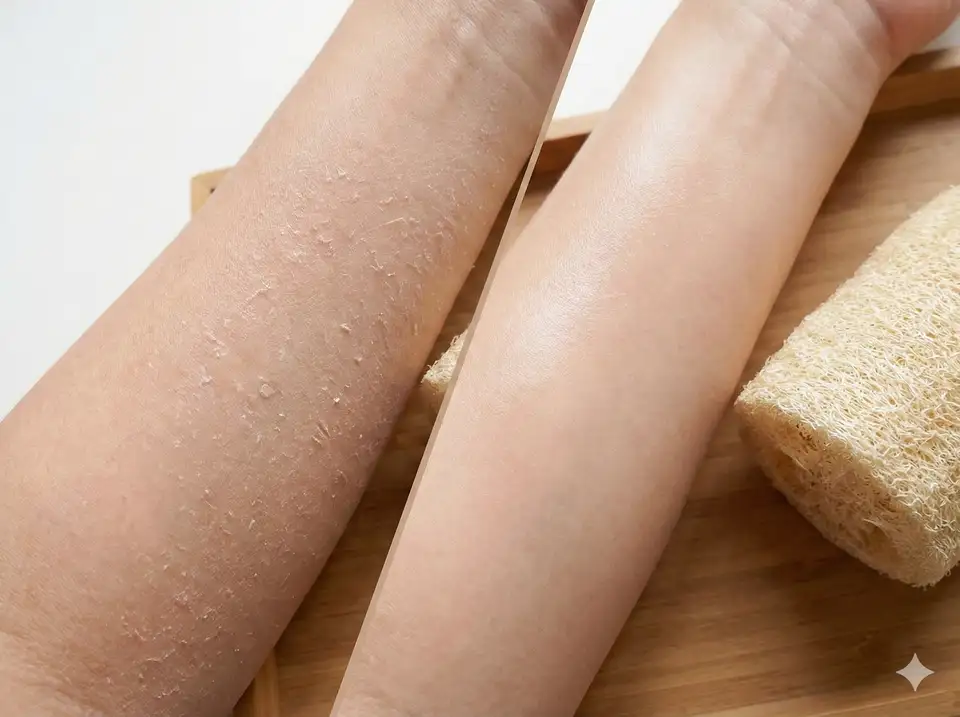
Exfoliating with a natural loofah is one of the most effective ways to remove dead skin cells, improve circulation, and reveal smoother, healthier skin. But here's what nobody tells you: using a loofah incorrectly can actually cause irritation, microtears, or even worsen skin conditions. I learned this the hard way when I first started using homegrown loofahs—I scrubbed way too hard and ended up with raw, irritated skin on my arms for days.
The difference between a good exfoliation session and a damaging one comes down to technique, frequency, and knowing your skin. After years of growing my own loofahs and testing different approaches, I've figured out what actually works. This guide covers everything from prepping your sponge to avoiding the mistakes I made early on. Whether you're new to natural loofahs or looking to refine your routine, you'll find practical tips you can use tonight. Learn more about the skin benefits of loofahs and why they outperform synthetic alternatives.
What Is Exfoliation and Why It Matters
Exfoliation is simply removing dead skin cells from your skin's outer layer. Your body does this naturally—you shed roughly 30,000 to 40,000 dead skin cells every minute. But they don't always fall off cleanly. They pile up, mix with oils and sweat, and create that dull, rough texture nobody wants.
Think of it like dust accumulating on furniture. Your skin "dusts itself" constantly, but sometimes it needs help. That's where a loofah comes in. The fibrous texture provides just enough friction to lift away what your skin can't shed on its own, without being so harsh that it damages the healthy cells underneath.
- Removes dead skin cells: Reveals fresh, healthy skin underneath
- Improves circulation: Gentle scrubbing stimulates blood flow to skin surface
- Unclogs pores: Prevents buildup that can lead to breakouts
- Smooths rough patches: Especially effective on elbows, knees, and heels
- Enhances product absorption: Moisturizers penetrate better on exfoliated skin
- Prevents ingrown hairs: Keeps follicles clear after shaving or waxing
- Natural and sustainable: Biodegradable alternative to plastic scrubbers
Discover more about how loofahs benefit your skin health.
Natural loofahs offer the perfect texture for exfoliation—firm enough to remove dead skin effectively, yet soft enough not to damage healthy skin when used properly. Unlike synthetic scrubbers, natural loofahs are completely biodegradable and free from microplastics that harm the environment. I've found that homegrown loofahs tend to have a more consistent, gentler texture than the overly-processed ones you find in stores.
How to Prepare Your Loofah for Exfoliation
Here's a mistake I made early on: grabbing a dry loofah and scrubbing away. Bad idea. A dry loofah feels like sandpaper against your skin and can cause real damage. The fibers need to absorb water and soften before they're safe for exfoliation.
Proper preparation takes about 2-3 minutes, and it's non-negotiable if you want good results without irritation.
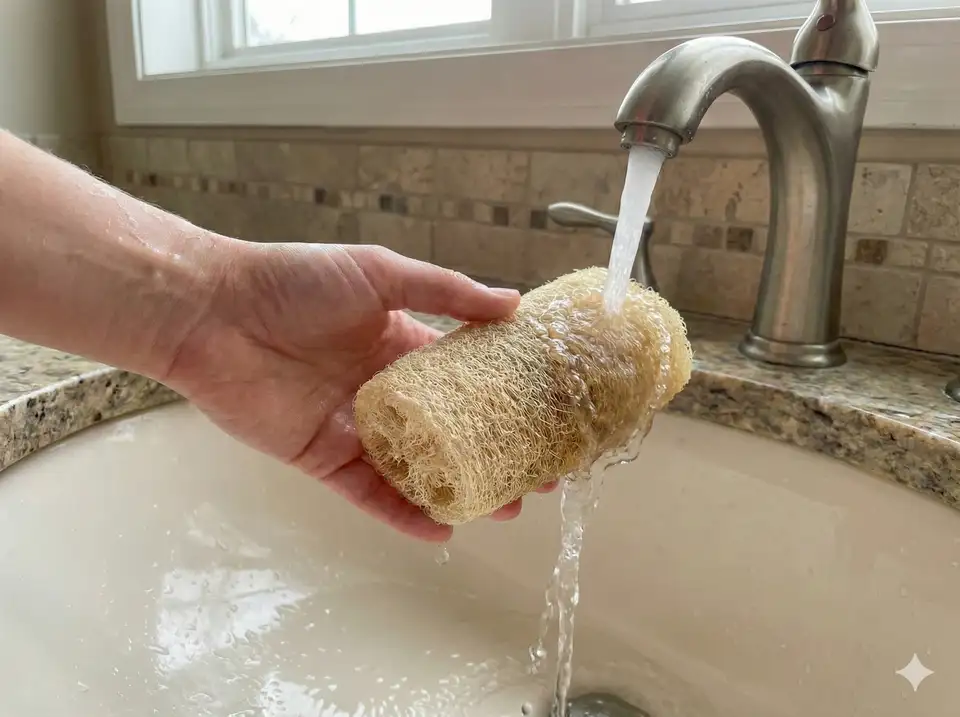
- Soak in warm water: Submerge your loofah in warm (not hot) water for 2-3 minutes
- Squeeze gently: Press the loofah to release trapped air and allow water absorption
- Check texture: The loofah should feel soft and pliable, not scratchy
- Apply cleanser: Add body wash, soap, or exfoliating scrub to the loofah
- Work into lather: Squeeze and massage to create foam throughout the sponge
Pro tip: Brand new loofahs may need a longer initial soak (5-10 minutes) to fully soften.
The water temperature matters more than you'd think. Warm water opens your pores and softens skin, making exfoliation more effective. But water that's too hot—the kind that turns your bathroom into a steam room—actually strips your skin's natural oils and can leave you feeling dry and tight. I aim for comfortably warm, not scalding.
Step-by-Step Exfoliation Technique
The actual scrubbing technique is where most people go wrong. They either press too hard (thinking more pressure means better results) or scrub in random, aggressive back-and-forth motions. Neither works well.
The key insight that changed my routine: let the loofah's texture do the work. You're not trying to sand your skin down. You're using friction to gently lift dead cells that are already ready to come off.

- Start with wet skin: Exfoliate in the shower or bath after your skin is wet and warm
- Use circular motions: Move the loofah in small, gentle circles rather than back-and-forth scrubbing
- Apply light pressure: Let the texture of the loofah do the work; don't press hard
- Work systematically: Start at your feet and work upward toward your heart to boost circulation
- Spend 15-20 seconds per area: Don't over-scrub any one spot
- Rinse frequently: Keep the loofah clean by rinsing off dead skin buildup during use
- Finish with a rinse: Thoroughly rinse your entire body with clean water
- Direction matters: Scrub upward on legs and arms to support lymphatic drainage
- Don't rush: A full-body exfoliation should take 3-5 minutes total
- Listen to your skin: If it feels uncomfortable or painful, you're pressing too hard
- Adjust texture: For gentler exfoliation, use a wetter loofah; for firmer scrubbing, wring out excess water

Best Body Areas to Exfoliate
Not all skin is created equal. The skin on your heels is about 1.4mm thick, while the skin around your eyes is only 0.5mm. This matters because thicker skin can handle—and often needs—more vigorous exfoliation, while thinner skin requires a gentler touch.
I've found the biggest improvements come from focusing on what I call the "rough zones": elbows, knees, heels, and the backs of arms. These areas tend to accumulate dead skin faster and can handle firmer pressure. Meanwhile, areas like your chest and stomach barely need any attention at all.
| Body Area | Exfoliation Level | Technique Notes |
|---|---|---|
| Feet, heels, soles | Firm | Can handle more pressure; excellent for removing calluses |
| Elbows and knees | Firm | Rough skin benefits from regular attention |
| Legs and arms | Moderate | Use circular motions; great for preventing ingrown hairs |
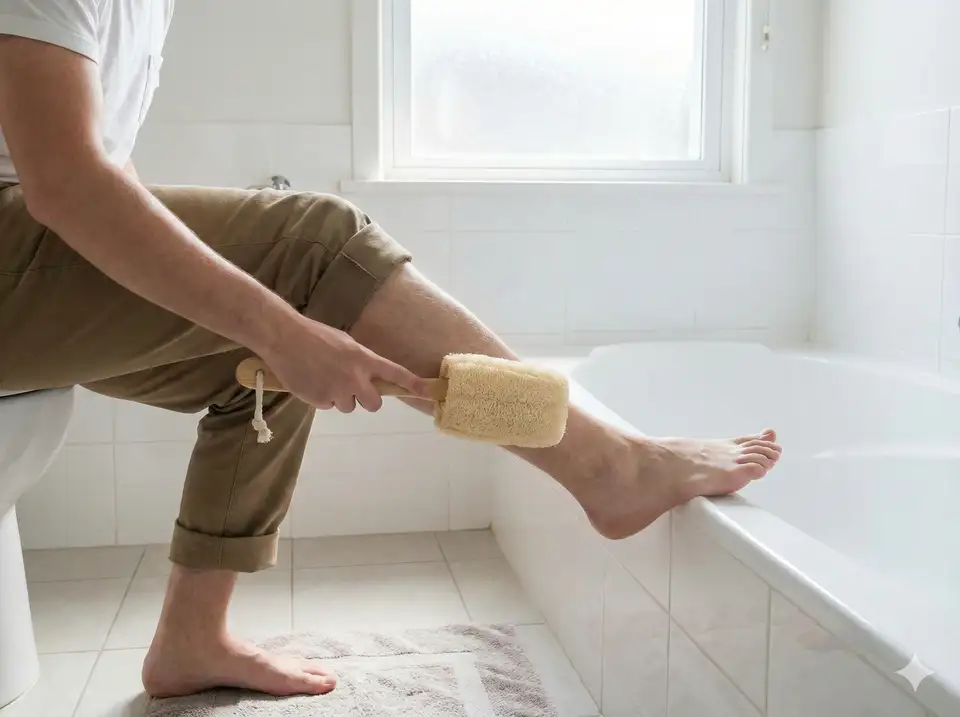
| Back and shoulders | Moderate | Use a loofah with handle or back strap for reach |
| Hands | Moderate | Focus on knuckles and dry areas |
| Torso (chest, stomach) | Gentle | Lighter pressure; avoid if skin is sensitive |
| Buttocks and thighs | Moderate | Can help reduce appearance of bumpy texture |
Areas to Avoid or Be Gentle With
While loofahs are excellent for body exfoliation, certain areas require extra caution or should be avoided entirely to prevent irritation or damage.

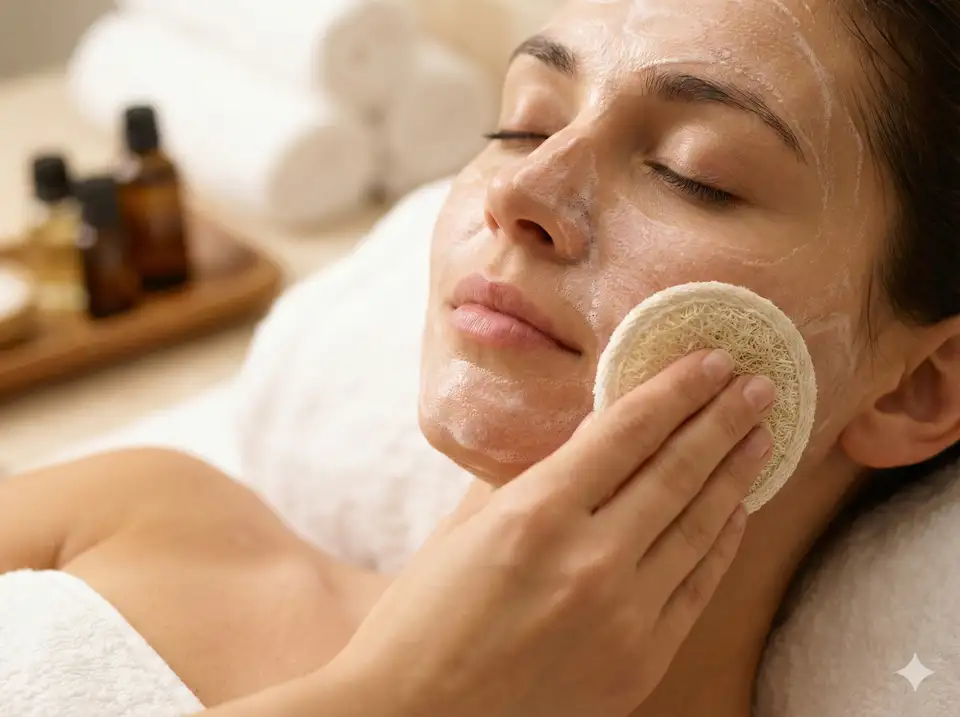
- Face: Facial skin is too delicate for standard loofah texture; use dedicated facial exfoliants or a very soft, small loofah piece with extremely light pressure
- Neck and décolletage: Very thin, delicate skin prone to damage and premature aging
- Genital area: Extremely sensitive mucous membranes; use hands only
- Breasts: Delicate skin that doesn't need aggressive exfoliation
- Active breakouts: Can spread bacteria and worsen acne or infections
- Open wounds or cuts: Wait until fully healed to avoid infection
- Sunburned skin: Already damaged; exfoliation will cause pain and further harm
- Rashes or eczema: Can aggravate inflammatory skin conditions
- Recent tattoos: Wait 4-6 weeks until completely healed
- After shaving: Wait 12-24 hours to avoid irritation on freshly shaved skin
How Often to Exfoliate with a Loofah
When I started exfoliating, I figured more was better. If twice a week made my skin smoother, surely every day would be even better, right? Wrong. After about two weeks of daily scrubbing, my skin became red, sensitive, and actually looked worse than before.
Here's what I learned: your skin has a natural cell turnover cycle of about 28 days. Exfoliation helps this process along, but doing it too often strips away healthy cells before they're ready to go. Your skin's protective barrier gets compromised, and you end up with the opposite of what you wanted—irritation, dryness, and increased sensitivity.
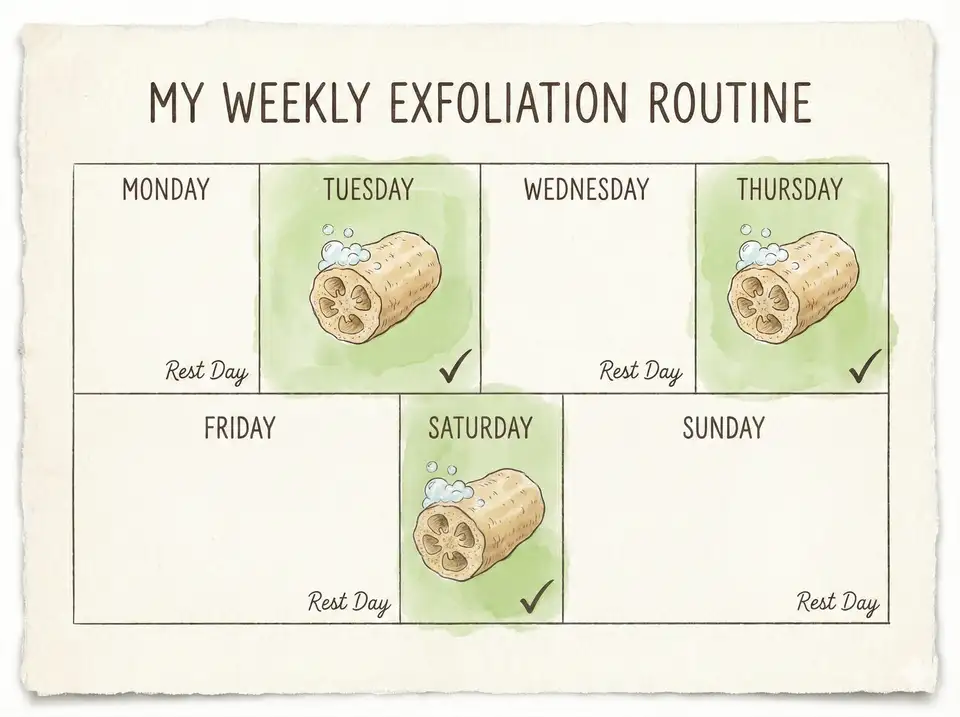
The sweet spot for most people is 2-3 times per week, but this varies based on your skin type.
- Normal skin: 2-3 times per week for full-body exfoliation
- Oily or thick skin: 3-4 times per week; may tolerate daily use on rough areas like feet
- Dry or mature skin: 1-2 times per week; always follow with rich moisturizer
- Sensitive skin: Once per week or less; use very light pressure
- Combination skin: 2-3 times per week, adjusting pressure by area
- Rough areas (elbows, knees, feet): Can be exfoliated more frequently, even daily
General rule: Most people achieve the best results with 2-3 weekly exfoliation sessions.
Consistency matters more than frequency. It's better to exfoliate 2-3 times per week consistently than to exfoliate daily for a week and then skip for a month. Your skin cells follow a natural turnover cycle, and regular exfoliation supports this process.
Signs of Over-Exfoliation
Over-exfoliation is sneaky. It doesn't happen overnight—it builds up gradually until one day you notice your skin looks and feels terrible. The tricky part is that in the moment, scrubbing feels good. It's satisfying to see dead skin coming off. But that satisfaction can lead you to overdo it.
I pushed too hard for about three weeks before I realized what was happening. My skin started stinging when I applied my regular moisturizer—a product I'd used for years without any issues. That was the wake-up call. Once you damage your skin barrier, it takes 7-14 days of gentle care to recover, and you have to stop exfoliating completely during that time.
Here's how to recognize the warning signs before things get that bad:
- Redness and irritation: Skin appears pink or red, especially after exfoliating
- Increased sensitivity: Products that never bothered you now sting or burn
- Excessive dryness: Skin feels tight, flaky, or rough despite moisturizing
- Shiny or raw appearance: Skin looks unusually glossy or stripped
- Breakouts: Increased acne or small bumps from damaged skin barrier
- Burning sensation: Skin feels uncomfortable during or after showering
- Peeling: Skin sheds in visible flakes or patches
- Inflammation: Swelling or puffiness in exfoliated areas
What to do: If you notice these signs, stop all exfoliation immediately and focus on gentle cleansing and intense moisturizing for 7-10 days.
Combining Loofah with Body Wash and Scrubs
Your loofah is a physical exfoliant—it removes dead skin through friction. But many body washes and scrubs contain chemical exfoliants too (ingredients like glycolic acid, salicylic acid, or fruit enzymes). Using both at once can be too much for your skin.
I made this mistake when I bought a "brightening body wash" without checking the ingredients. It contained AHAs. Combined with my loofah, I was essentially double-exfoliating every shower. My skin handled it for about a week before it started getting patchy and irritated.
The rule I follow now: if my body wash has any exfoliating ingredients, I skip the loofah and just use my hands. If I'm using my loofah, I stick to gentle, moisturizing cleansers.

- Gentle body washes: Moisturizing formulas work well for regular exfoliation
- Natural soaps: Handmade or organic soaps complement natural loofahs
- Body scrubs (use carefully): Can be used with loofah but only 1-2 times per month to avoid over-exfoliation
- Exfoliating body washes: If your cleanser contains chemical exfoliants (AHAs/BHAs), reduce loofah frequency to once weekly
- Antibacterial soaps (occasional): Can help sanitize the loofah itself but may dry skin with frequent use
- Avoid: Very harsh or drying soaps that strip natural oils
After-Care: Moisturizing After Exfoliation
Exfoliation is only half the process. What you do afterward determines whether your skin ends up soft and glowing or dry and flaky. Freshly exfoliated skin has just lost its top layer of cells—the layer that normally locks in moisture. Without proper aftercare, that moisture escapes, and you're left worse off than before.
The timing here is critical. You've got about 3 minutes after stepping out of the shower before your skin starts losing moisture rapidly. This is when your skin is most receptive to absorbing hydration, so don't waste it by checking your phone or getting distracted. Moisturize immediately while your skin is still slightly damp.
- Rinse thoroughly: Remove all cleanser and dead skin cells with clean water
- Pat dry gently: Don't rub vigorously with a towel; pat skin until slightly damp
- Moisturize immediately: Apply body lotion or oil within 3 minutes while skin is still damp
- Use rich formulas: Exfoliated skin absorbs deeper moisture—choose thick creams or natural oils
- Don't skip sunscreen: If exfoliating before sun exposure, always apply SPF to exposed areas
- Hydrate internally: Drink water to support skin hydration from the inside
The best time to exfoliate is evening, giving your skin overnight to repair and regenerate. If you must exfoliate in the morning, be extra diligent about sun protection, as exfoliated skin is more susceptible to UV damage.
Caring for Your Loofah Between Uses
This is the part most people skip, and it's a big mistake. Your loofah lives in a warm, wet environment and collects dead skin cells every time you use it. Without proper care, it becomes a breeding ground for bacteria and mold. I've seen neglected loofahs turn gray-green and develop a musty smell within just a couple weeks.
The single most important habit: get your loofah completely dry between uses. Bacteria can't thrive in dry conditions, but they multiply rapidly when things stay damp. This means hanging your loofah somewhere with good airflow—not leaving it sitting in a puddle on your shower shelf.
- Rinse thoroughly: Remove all soap, body wash, and dead skin cells with hot water
- Squeeze out excess water: Wring gently but firmly to remove trapped moisture
- Hang to dry: Use a hook or loop in a well-ventilated area, not in the shower
- Avoid enclosed spaces: Don't store in cabinets or drawers while damp
- Keep it dry between uses: Should be completely dry within 24 hours
Learn more about proper loofah cleaning and care techniques.
- Boiling method: Boil in water for 5 minutes weekly to kill bacteria
- Vinegar soak: Soak in diluted white vinegar (1:1 with water) for 30 minutes
- Microwave method: Wet thoroughly and microwave for 30 seconds (ensure it stays wet)
- Dishwasher: Run through a hot cycle weekly for deep cleaning
- Bleach solution (occasional): 1 tablespoon bleach per gallon of water, soak 5 minutes, rinse thoroughly
When to Replace Your Loofah
No matter how well you care for your loofah, it won't last forever. The fibers break down, the texture becomes less effective, and even with regular sanitizing, bacteria build up in the microscopic crevices over time.
I used to push my loofahs too long because I didn't want to waste them. But using an old loofah is counterproductive—you're spreading bacteria on your skin while getting subpar exfoliation. Now that I grow my own loofahs, I don't hesitate to swap them out regularly. One plant produces more than I can use in a year.
- General recommendation: Replace every 3-4 weeks with regular use
- Daily use: Replace every 2-3 weeks
- Weekly use: Can last 6-8 weeks
- Signs to replace immediately:
- Musty or moldy smell
- Visible discoloration or dark spots
- Falling apart or crumbling
- Won't dry completely between uses
- Lost its scrubbing texture
Read our complete guide on when to replace your loofah sponge.
- Buy in bulk: Keep several loofahs on hand so you can rotate or replace easily
- Personal use only: Never share loofahs with others to prevent bacteria transfer
- Separate for different areas: Consider using different loofahs for feet vs. body
- Grow your own: Growing loofahs at home ensures an unlimited, fresh supply
Common Exfoliation Mistakes to Avoid
I've made most of these mistakes myself over the years, so I'm sharing them in hopes you won't have to learn the hard way. Some are obvious in hindsight, but when you're just starting out with loofah exfoliation, they're easy traps to fall into.
| Mistake | Why It's Problematic | Better Approach |
|---|---|---|
| Using a dry loofah | Too abrasive; can scratch and damage skin | Always soak and soften for 2-3 minutes first |
| Scrubbing too hard | Causes microtears, redness, and irritation | Use light pressure; let the texture do the work |
| Daily exfoliation | Over-exfoliates and damages skin barrier | Stick to 2-3 times weekly for most skin types |
| Using on face | Facial skin too delicate for loofah texture | Use gentle facial exfoliants instead |
| Not rinsing properly | Leaves residue and dead skin on loofah | Rinse thoroughly with hot water after each use |
| Storing while wet | Promotes bacterial and mold growth | Hang in ventilated area to dry completely |
| Using for too long | Old loofahs harbor bacteria despite cleaning | Replace every 3-4 weeks |
| Skipping moisturizer | Leaves exfoliated skin dry and vulnerable | Always moisturize within 3 minutes of exfoliating |
Special Considerations for Sensitive Skin
Sensitive skin doesn't mean you can't exfoliate—it just means you need to be more careful about how you do it. My partner has sensitive skin and was skeptical about using a loofah at all. After some experimentation, we found an approach that works: extra-soaked loofah, barely-there pressure, and only once a week.
The key is starting slow and paying close attention to how your skin responds. If you notice redness that lasts more than 30 minutes after your shower, you're being too aggressive. Scale back and try again.
- Frequency: Limit to once per week or less
- Soak longer: Use an extra-soft, thoroughly soaked loofah
- Very light pressure: Barely touch the skin while scrubbing
- Avoid chemical exfoliants: Don't combine with AHA/BHA products
- Fragrance-free products: Use hypoallergenic, unscented cleansers
- Test first: Try on small area (like arm) before full-body use
- Skip if flaring: Avoid during eczema, rosacea, or psoriasis flare-ups
- Consult dermatologist: Get professional advice for chronic skin conditions
Related Loofah Guides
Recommended Products
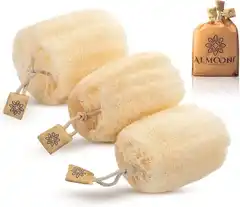
Almooni Egyptian Loofah Bath Sponges (3-Pack)
Premium thick-fiber natural loofahs - gentle exfoliation for all skin types - lasts 3-4 weeks each
Buy on Amazon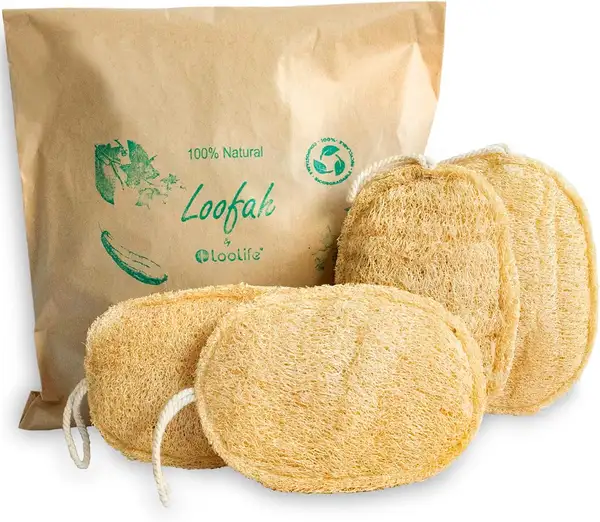
Natural Loofah Exfoliating Sponges (4-Pack)
100% organic biodegradable bath sponges - plastic-free alternative that's gentle on skin and planet
Buy on AmazonAs an Amazon Associate, we earn from qualifying purchases.