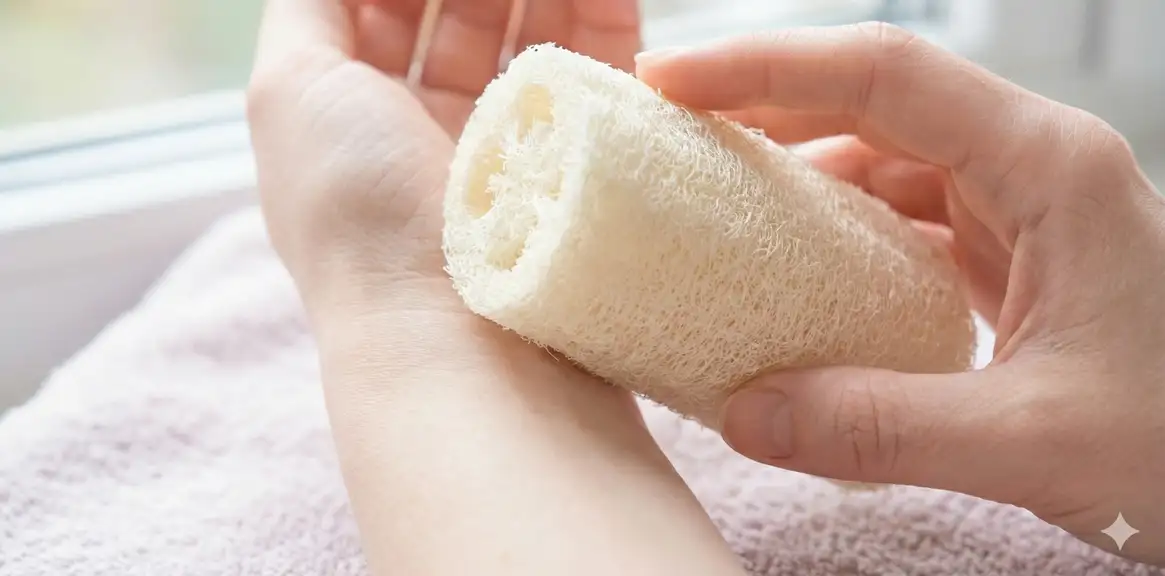
If you have sensitive skin, you might wonder if loofah exfoliation is safe for you. The good news is that with the right approach, natural loofahs can be gentler than many synthetic alternatives and provide benefits without irritation.
This guide covers everything you need to know about choosing and using loofahs for sensitive skin, including which types to avoid and how to build a routine with gentle exfoliation methods that works.
Can Sensitive Skin Use Loofah?
Yes, but with important modifications. Sensitive skin lacks a robust moisture barrier and reacts more strongly to friction, chemicals, and environmental factors. The key is using the right loofah type with proper technique.
Natural loofah fibers offer several advantages for sensitive skin. They don't contain the chemical additives found in synthetic sponges that could trigger reactions. The pressure is entirely under your control, allowing for gentle application. Most importantly, loofah softens significantly when wet, reducing abrasiveness to a level that sensitive skin can typically tolerate.
The benefits also extend to sustainability—natural loofahs are biodegradable and eco-friendly, making them a good choice for those who want to minimize their environmental impact while caring for their skin.
Skip loofah if you have active eczema flares, rosacea on body, open wounds, sunburn, or after chemical peels/retinoid use. Wait until skin has fully healed before resuming any physical exfoliation.
Choosing the Right Loofah for Sensitive Skin
Not all loofahs are suitable for sensitive skin. The type you choose makes a significant difference in how your skin responds to exfoliation. Look for softer loofah varieties specifically designed for delicate skin.
Best Options for Sensitive Skin
| Loofah Type | Best For | Softness Level |
|---|---|---|
| Young/Baby Loofah | Very sensitive skin | Very Soft |
| Loofah Mitt | Control over pressure | Soft-Medium |
| Pre-Softened Loofah | General sensitive skin | Soft |
| Thin Loofah Slices | Targeted areas | Soft-Medium |
What to Avoid
Certain loofah types are too harsh for sensitive skin and should be avoided. Mature, dense loofahs with thick fibers are too abrasive and can cause micro-tears. Dry, stiff loofahs that haven't been properly soaked will scratch and irritate. Colored or scented loofahs contain added chemicals that can trigger reactions. Loofahs blended with synthetic materials may contain unknown irritants—choose a hypoallergenic natural option instead.
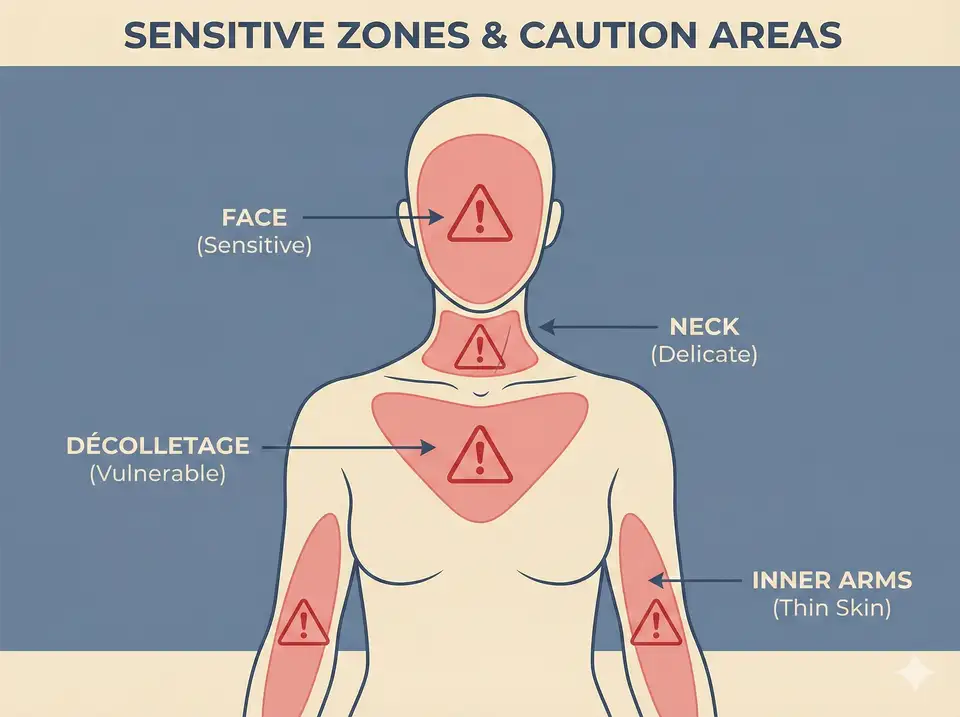
After soaking your loofah for 3-5 minutes, press it against the inside of your wrist. It should feel soft and pliable, not scratchy or rough. If it feels abrasive on your wrist, it's too harsh for sensitive body areas.

Gentle Exfoliation Technique
Proper technique is more important than the tool itself for sensitive skin. Even the softest loofah can cause irritation if used incorrectly.
- Soak your loofah thoroughly - 3-5 minutes in warm water until completely soft
- Shower first - Let warm (not hot!) water soften skin for 5 minutes
- Use minimal cleanser - A small amount of fragrance-free, gentle body wash
- Apply featherlight pressure - Let the texture do the work; barely touch the skin
- Use slow, gentle circles - No scrubbing or vigorous back-and-forth
- Limit to 15-20 seconds per area - Don't over-exfoliate any spot
- Rinse with cool water - Helps calm skin and close pores
- Pat (don't rub) dry - Use a soft, clean towel
- Moisturize immediately - Within 60 seconds while skin is damp

How Often to Exfoliate
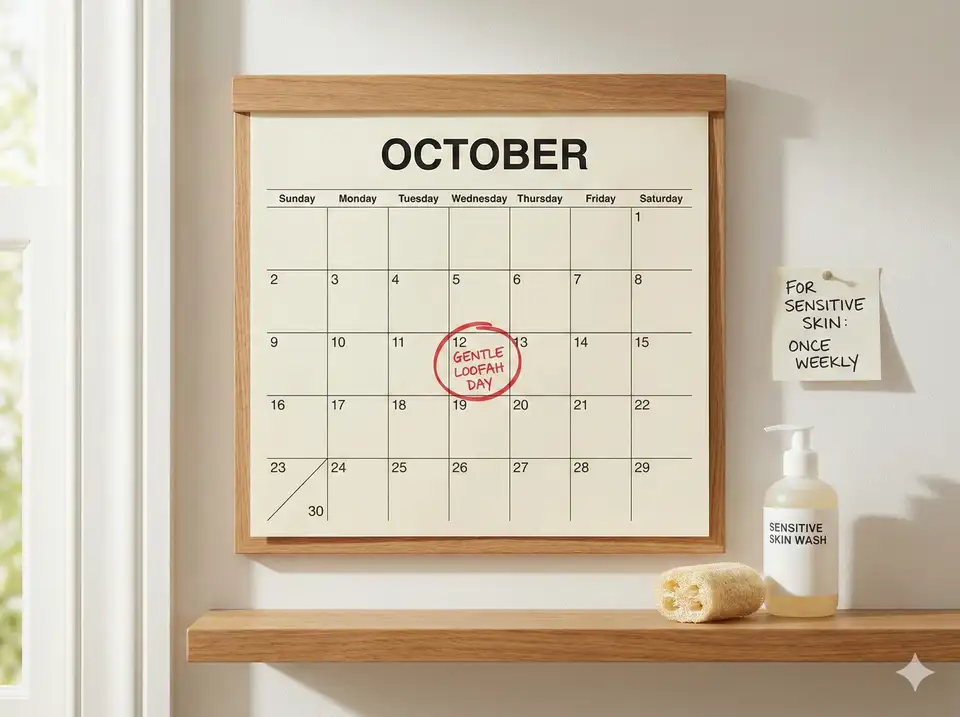
Sensitive skin needs far less exfoliation than normal skin types. Over-exfoliation is the most common mistake and can damage your skin's protective barrier, leading to increased sensitivity and irritation. Many of the same principles apply to sensitive and dry skin care.
Start with exfoliating once every 7-10 days. If your skin tolerates this well after 2-3 weeks, you may gradually increase to twice weekly maximum. Never exfoliate more than twice per week, regardless of how well your skin seems to handle it.
Watch for signs that you're exfoliating too often: redness lasting more than 30 minutes after showering, increased sensitivity to products you normally tolerate, a tight or uncomfortable feeling, flakiness or peeling between exfoliation sessions, and new breakouts or bumps appearing.
Best Products to Use with Loofah
Cleansers for Sensitive Skin
Choose fragrance-free body washes, cream or oil-based cleansers that won't strip moisture, colloidal oatmeal formulas that soothe while cleaning, and pH-balanced products around 5.5 to match your skin's natural pH.
Moisturizers for After Exfoliation
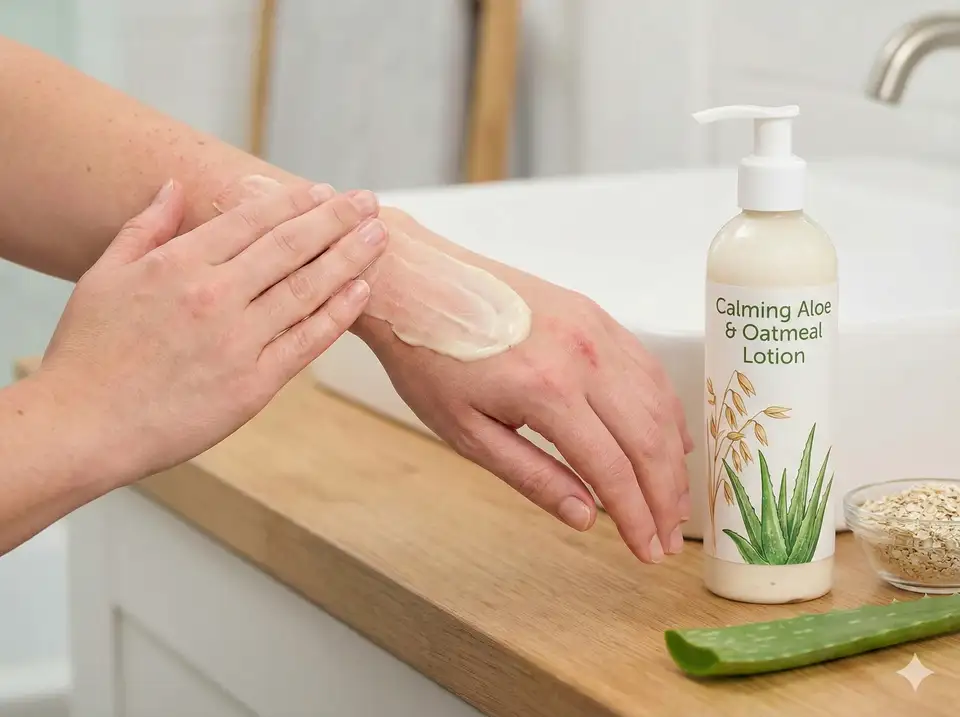
Ceramide-based creams like CeraVe or Eucerin help rebuild the skin barrier. Colloidal oatmeal lotions like Aveeno calm any post-exfoliation sensitivity. Fragrance-free body oils provide deep hydration. For facial use, hyaluronic acid serums help skin retain moisture.
How to Patch Test
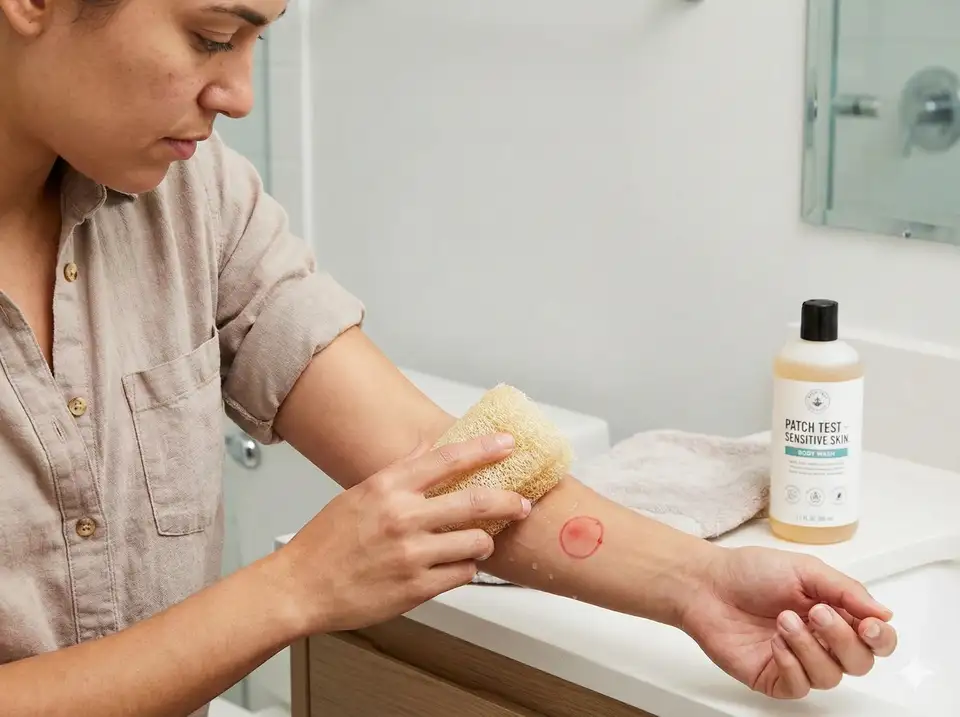
Before using any new loofah on your body, always do a patch test. This simple step can save you from full-body irritation.
- Soak the loofah until very soft (3-5 minutes)
- Gently rub a small area on your inner forearm for 10 seconds
- Wait 24-48 hours for any reaction
- If no redness, itching, or irritation appears, proceed with body use
- Start with less sensitive areas (arms, legs) before using on torso
Alternatives for Very Sensitive Skin
If even soft loofahs prove too harsh, consider these gentler alternatives. A konjac sponge is ultra-gentle and works well for both face and body. A soft washcloth provides mild exfoliation with very little abrasion. Silicone scrubbers have a smooth, non-abrasive surface that many sensitive skin types tolerate well. Chemical exfoliants like gentle AHAs (lactic acid) exfoliate without any physical friction. Exfoliating gloves give you more control over pressure than a handheld loofah.
Loofah Care for Sensitive Skin Users
Proper loofah hygiene is especially important for sensitive skin, which is more prone to bacterial irritation. Focus on keeping your loofah bacteria-free to prevent breakouts and inflammation.
Replace your loofah every 2-3 weeks—sooner than recommended for normal skin. Dry it completely between uses by hanging it outside the shower in a well-ventilated area. Sanitize weekly by soaking in diluted hydrogen peroxide or white vinegar. Never share your loofah with others. Inspect regularly and discard immediately if any discoloration or odor develops.
Learn more in our complete loofah cleaning guide.
Recommended Products
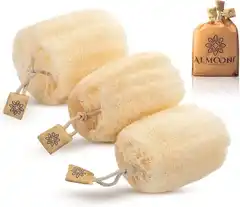
Almooni Egyptian Loofah Bath Sponges (3-Pack)
Premium thick-fiber natural loofahs - gentle exfoliation for all skin types - lasts 3-4 weeks each
Buy on Amazon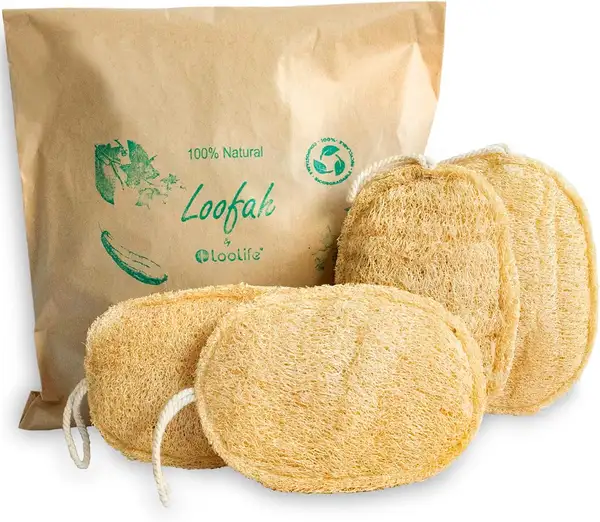
Natural Loofah Exfoliating Sponges (4-Pack)
100% organic biodegradable bath sponges - plastic-free alternative that's gentle on skin and planet
Buy on AmazonAs an Amazon Associate, we earn from qualifying purchases.