
If you're transitioning away from plastic sponges and synthetic scrubbers, you've likely encountered a variety of natural alternatives. Loofahs, sea sponges, sisal, konjac, and even silicone scrubbers all claim to be eco-friendly options, but they differ significantly in their environmental impact, performance, and best use cases. When I first started exploring loofah compared to synthetics, I was overwhelmed by the choices - but after testing each option extensively, clear winners emerged for different applications.
Understanding these differences helps you make an informed choice that aligns with your specific needs. Someone looking for a gentle facial cleanser has different requirements than someone who needs a heavy-duty dish scrubber, and the same natural material won't serve both purposes equally well. The environmental considerations also vary significantly between these products.
This comprehensive comparison examines each sustainable alternative across multiple factors including price, durability, versatility, environmental impact, and performance. By the end, you'll know exactly which option makes the most sense for your bathroom, kitchen, and overall eco-conscious lifestyle.
Sustainable Alternatives Compared
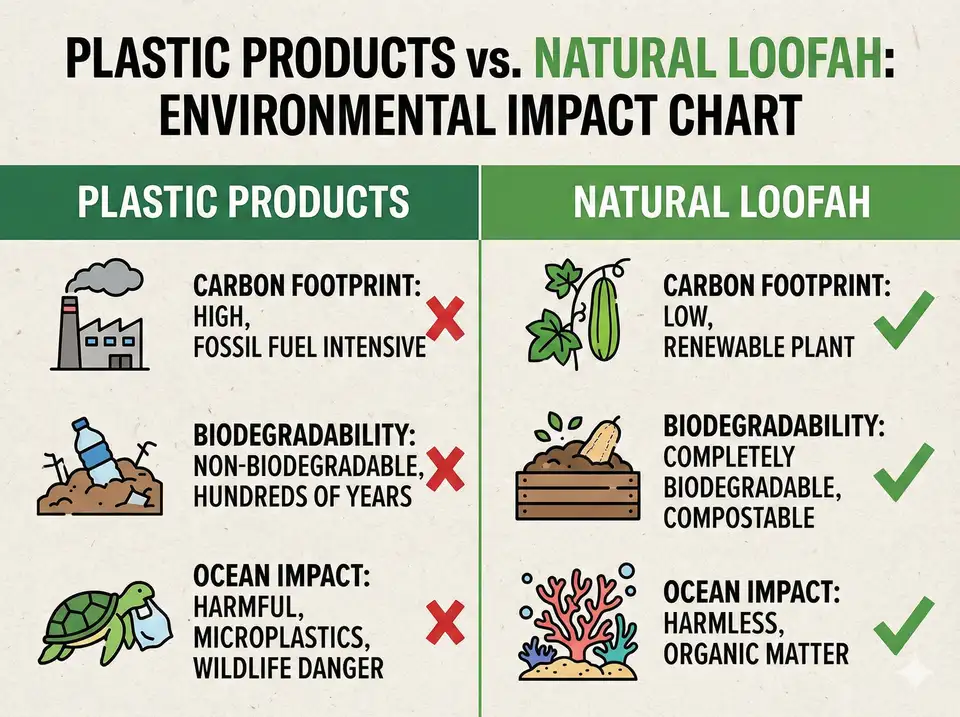
All of these options are better than plastic sponges that take centuries to decompose and shed microplastics into our waterways. However, each natural scrubber has unique characteristics that make it better suited for certain applications. Let's explore the four main contenders in detail. For a more in-depth look at specific matchups, check our detailed comparison of options.
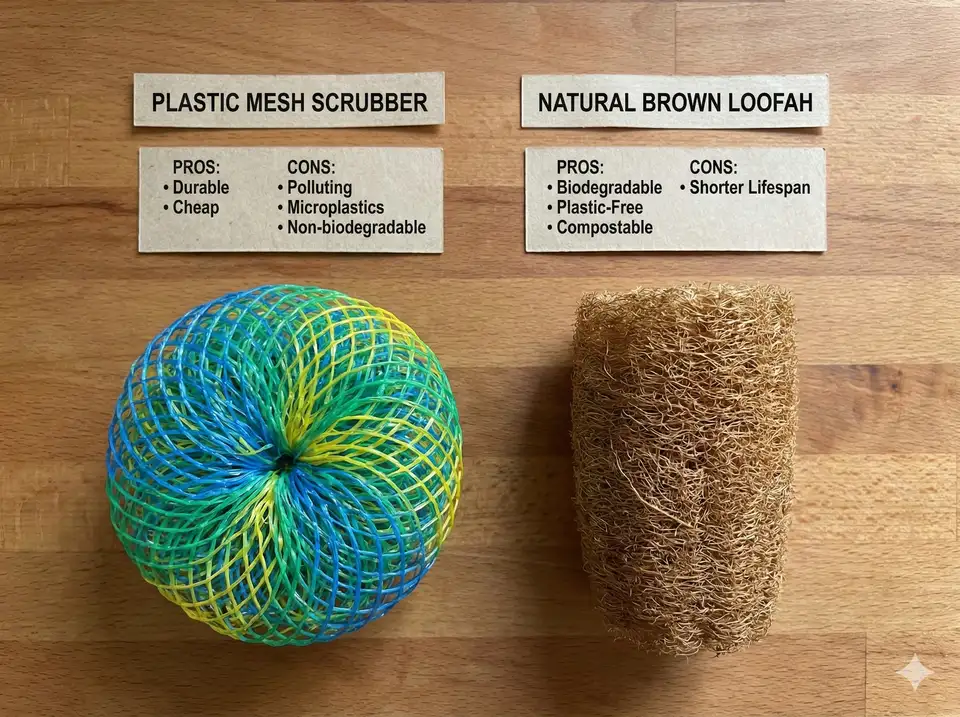
Sea sponges are marine animals harvested from the ocean floor. They've been used for bathing for thousands of years and offer an incredibly soft, luxurious texture that's unmatched by any other natural scrubber. However, their harvesting raises sustainability concerns and their high price point makes them a premium choice.
Pros: Ultra-soft texture, naturally antibacterial, long-lasting (2-6 months), excellent for sensitive skin, hypoallergenic
Cons: Expensive ($8-25 each), ocean harvesting concerns, cannot be homegrown, limited scrubbing power for tough jobs
Sisal comes from the agave plant and creates stiff, rope-like fibers that excel at heavy-duty scrubbing tasks. It's the most affordable natural option and works wonderfully for kitchen cleaning, but the rough texture makes it unsuitable for body use. Many people keep sisal for dishes and loofah for bathing.
Pros: Excellent for tough scrubbing jobs, very affordable ($2-4), fully biodegradable, fast-drying, durable
Cons: Too abrasive for skin use, can scratch delicate surfaces, rough texture even when wet, not versatile
Konjac sponges are made from the root of the konjac plant, the same vegetable used in shirataki noodles. They're incredibly gentle, making them perfect for facial cleansing and sensitive skin. Many varieties are infused with charcoal, clay, or botanical extracts for added skincare benefits.
Pros: Ultra-gentle for facial use, various infusions available (charcoal, green tea, clay), fully compostable, affordable ($4-8)
Cons: Short lifespan (1-3 months), only suitable for face and delicate skin, cannot scrub dishes or tough surfaces, must stay wet when not in use
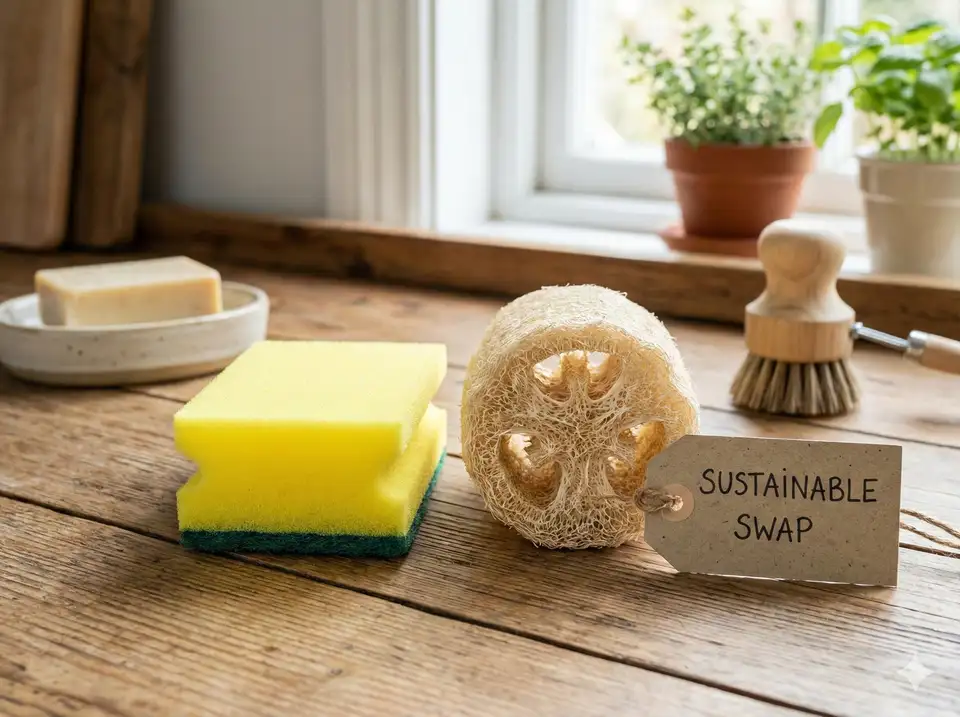
Loofahs come from the fibrous interior of mature luffa gourds. They strike the perfect balance between gentle enough for body exfoliation and tough enough for dish washing. Uniquely among sustainable alternatives, loofahs can be grown at home, giving you complete control over quality and a virtually free supply.
Pros: Can be homegrown for free, versatile for body and kitchen, affordable ($2-5), composts in 30 days, natural antibacterial properties
Cons: Requires drying between uses, 4-6 week lifespan, texture may be too rough for very sensitive skin, needs proper care to prevent mold

Complete Comparison Chart
The following table provides a side-by-side comparison of all four sustainable scrubber options across the factors that matter most when choosing an eco-friendly alternative to plastic sponges.
| Feature | Loofah | Sea Sponge | Sisal | Konjac |
|---|---|---|---|---|
| Price | $2-5 | $8-25 | $2-4 | $4-8 |
| Lifespan | 4-6 weeks | 2-6 months | 4-8 weeks | 1-3 months |
| Body Scrubbing | Excellent | Excellent | Too rough | Face only |
| Kitchen Use | Excellent | Not ideal | Excellent | Not suitable |
| Sensitive Skin | Moderate | Excellent | Not suitable | Excellent |
| Can Homegrow | Yes | No | No | No |
| Compost Time | 30 days | 60-90 days | 30 days | 30 days |
| Versatility | High | Medium | Medium | Low |
Which Is Best For You?
The right choice depends on your specific needs, priorities, and how you plan to use your sustainable scrubber. Here's a breakdown of which option makes the most sense for different use cases and preferences.
Choose Loofah If You Want:
Natural loofah is the best all-around choice for most people because it handles multiple tasks effectively. If you want a single sustainable product that works for daily showering, washing dishes, scrubbing countertops, and cleaning sinks, loofah delivers. The ability to grow your own loofahs is a unique advantage that no other sustainable scrubber offers - truly the most sustainable option: homegrown. A single plant produces 10-20 sponges worth $30-60 in retail value, making it the most economical long-term choice.
- One product for multiple uses (body, dishes, cleaning)
- Interest in growing your own supply
- Budget-conscious sustainability
- Maximum environmental benefit (homegrown = zero carbon footprint)
- Effective exfoliation without being too gentle

Choose Sea Sponge If You Want:
Sea sponges are the premium choice for those who prioritize the gentlest possible touch on their skin. If you have very sensitive or reactive skin, or simply prefer a luxuriously soft bathing experience, sea sponge is worth the higher investment. The longer lifespan (2-6 months versus 4-6 weeks for loofah) partially offsets the higher initial cost.
- Very sensitive or delicate skin
- The longest lifespan per unit
- A luxury bathing experience
- Something softer than loofah's texture
- Primarily body use (not kitchen)
Choose Sisal If You Want:
Sisal excels in the kitchen where tough, abrasive scrubbing power is an advantage rather than a drawback. If your main concern is replacing plastic dish sponges and you need something that can tackle burnt-on food, hard water stains, and grimy pots, sisal delivers. Just keep a separate, gentler option for body care.
- Kitchen cleaning as your primary need
- Heavy-duty scrubbing power
- The lowest price per scrubber
- A separate product just for dishes
- Fast-drying material (prevents bacteria)
Choose Konjac If You Want:
Konjac sponges are specialists, not generalists. They excel at one thing: gentle facial cleansing. If you're building a complete sustainable bath routine and want something specifically for your face, konjac is the answer. The infused varieties (charcoal for oily skin, green tea for anti-aging, clay for pore cleansing) add skincare benefits beyond simple cleansing.
- A dedicated facial cleansing sponge
- Very sensitive facial skin
- Added skincare benefits from infusions
- Something exclusively for face care
- A complement to loofah for body use
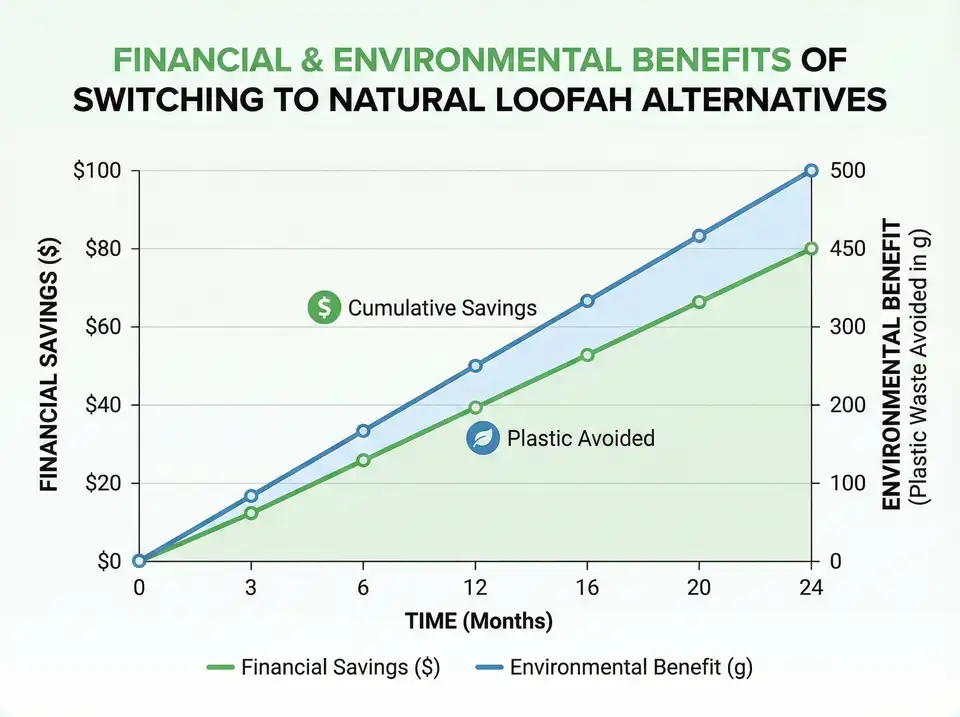
- For most people, natural loofah is the best choice. It's the most versatile option - use it in the shower, kitchen, and for household cleaning. It's affordable, fully sustainable, and uniquely can be homegrown for essentially free loofahs forever.
- For sensitive skin: Pair a loofah (for body and cleaning) with a konjac sponge (for face). This combination gives you the best of both worlds while staying fully eco-friendly.
- For heavy kitchen use: Keep sisal scrubbers for tough pots and pans, loofah for everyday dishes, and a konjac for your face. This three-product system covers all bases.
When your natural scrubbers reach the end of life for natural products, simply toss them in the compost - they'll break down completely in about 30 days, returning nutrients to the soil rather than sitting in a landfill for centuries.
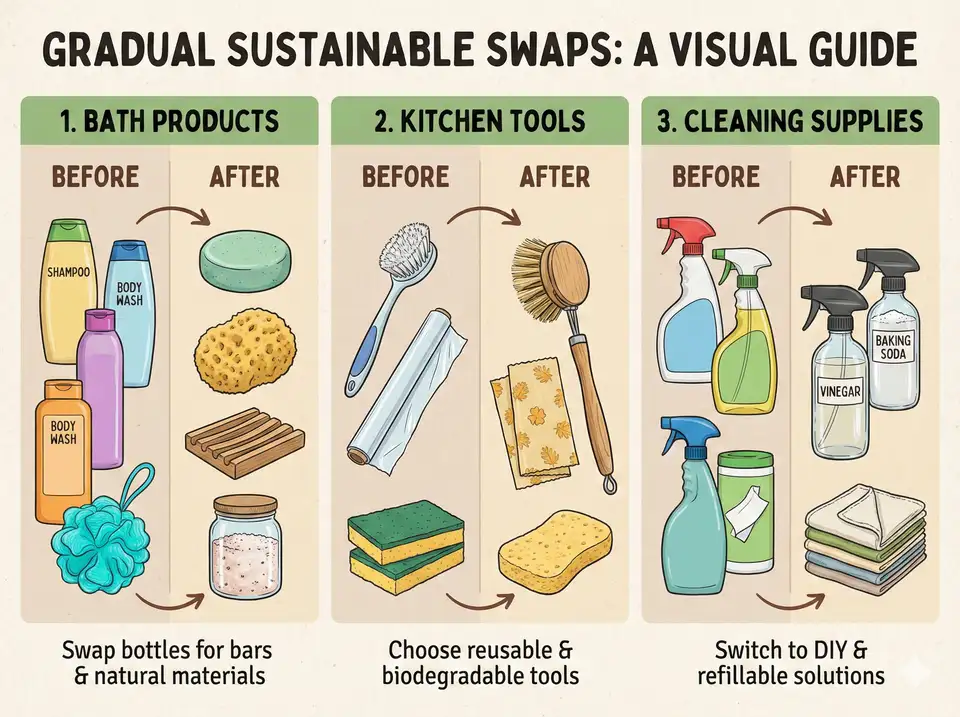
Recommended Sustainable Scrubbers
Based on our comparison, here are the top products in each category to help you start your transition away from plastic sponges.
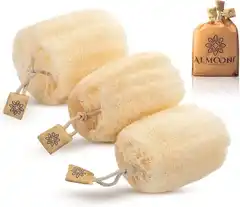
Almooni Egyptian Loofah Bath Sponges (3-Pack)
Premium thick-fiber natural loofahs - gentle exfoliation for all skin types - lasts 3-4 weeks each
Buy on Amazon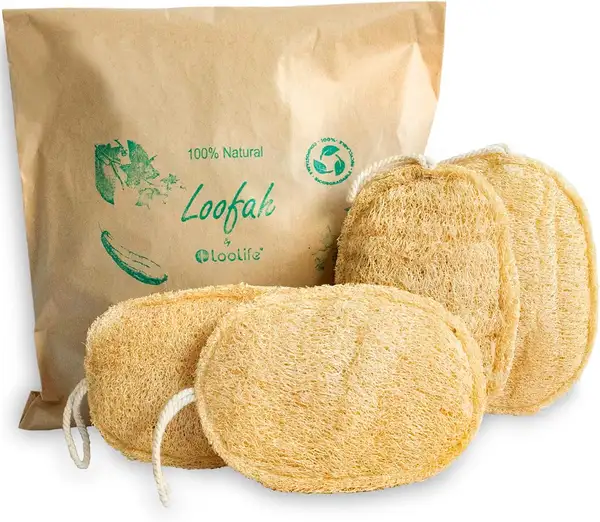
Natural Loofah Exfoliating Sponges (4-Pack)
100% organic biodegradable bath sponges - plastic-free alternative that's gentle on skin and planet
Buy on AmazonAs an Amazon Associate, we earn from qualifying purchases.